Skip to content
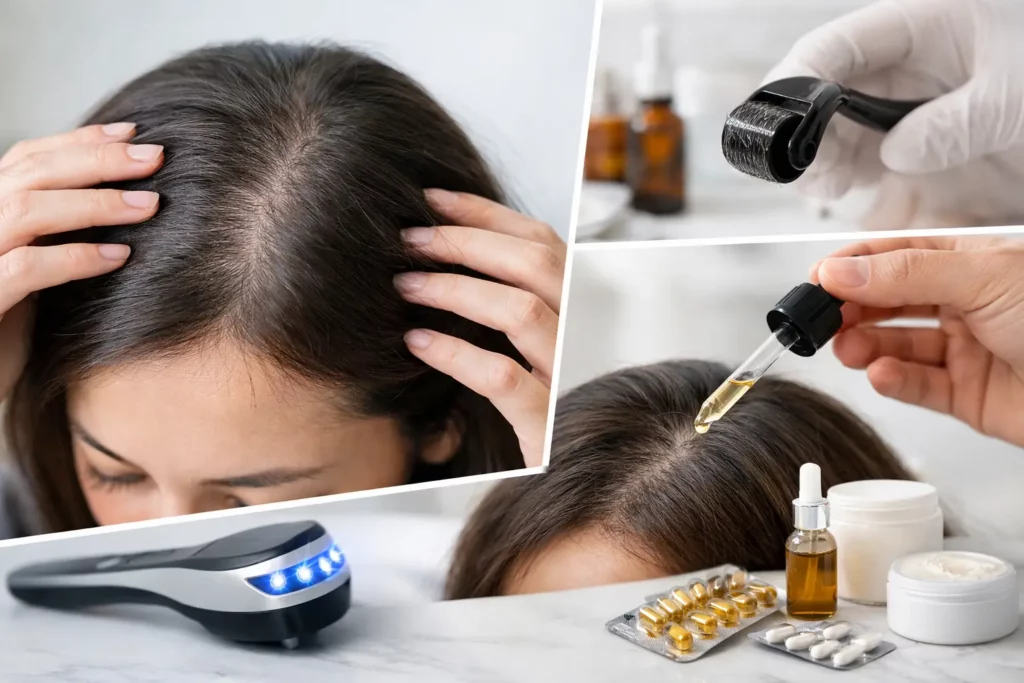
Hair shedding in the shower is one thing. Seeing your part widen, your ponytail feel smaller, or your hairline look thinner in photos is different – and for many people, it can feel personal fast. The best treatments for hair thinning are not one-size-fits-all, because thinning can be driven by hormones, genetics, stress, inflammation, nutrition, age, and even how you style your hair.
Table of Contents
ToggleThat is why the smartest first step is not buying another trending serum. It is understanding what kind of thinning you are dealing with, how long it has been happening, and whether your goal is slowing loss, stimulating regrowth, improving density, or all three. When treatment is matched to the cause, results are far more predictable.
What actually causes hair thinning?
Hair thinning is a broad term, and that matters. Some patients are seeing androgenetic hair loss, which is the gradual, hereditary pattern of thinning common in both women and men. Others are dealing with telogen effluvium, a stress-related shedding pattern that can show up after illness, surgery, weight loss, hormonal shifts, or emotional stress. Some experience thinning from traction, scalp inflammation, nutrient deficiencies, or menopause.
These categories can overlap. A person with inherited thinning may also go through a shedding event after a stressful season, which makes the change feel sudden. That is one reason self-diagnosing can be frustrating. Two people can have similar symptoms and need very different plans.
Best treatments for hair thinning depend on the cause
The most effective approach usually combines medical evaluation with a targeted treatment plan. Here is where many people get stuck – they want one answer, but hair restoration often works best in layers.
PRP hair restoration
PRP, or platelet-rich plasma, is one of the most requested in-office options for thinning hair, and for good reason. It uses your own blood sample, which is processed to concentrate growth factors and then injected into areas of thinning on the scalp. The goal is to support healthier follicles and improve the environment for growth.
PRP tends to work best for early to moderate thinning rather than fully dormant or scarred follicles. It is especially appealing to patients who want a natural, non-surgical option with minimal downtime. The trade-off is that it is not instant. Most people need a series of treatments and maintenance sessions, and results build gradually over several months.
Prescription treatments
For many patients, prescription therapy is a core part of the best treatments for hair thinning. Topical minoxidil is widely used to help prolong the growth phase of the hair cycle. Oral medications may also be considered in appropriate patients, depending on the pattern of loss, sex, medical history, and risk factors.
These treatments can be highly effective, but consistency matters. They are less like a one-time fix and more like a maintenance strategy. If you stop treatment, you may lose the progress you gained. That does not make them a poor choice – it simply means expectations should be honest from the beginning.
Nutritional and hormonal support
Not every thinning case is primarily cosmetic. Low iron, thyroid imbalance, vitamin deficiencies, post-pregnancy changes, and menopause can all contribute. In those situations, treating the hair without addressing the internal trigger can limit results.
This is where a medically guided consultation makes a difference. If there are signs that hormones, stress, or nutritional gaps are contributing, those factors should be evaluated alongside aesthetic treatment. Healthy hair growth depends on the body having the right conditions to support it.
Scalp health and microneedling
A healthy scalp is often overlooked. Product buildup, inflammation, seborrheic dermatitis, and chronic irritation can affect the hair growth environment. For some patients, treatment includes improving scalp care and reducing factors that may be weakening follicles over time.
Microneedling may also be recommended in certain plans. By creating controlled micro-injuries, it can stimulate healing pathways and may enhance the absorption or effectiveness of topical treatments. It is not the right fit for everyone, but in the right candidate, it can be a useful add-on rather than a standalone answer.
How to tell which hair thinning treatment is right for you
The timeline of your hair loss matters. If shedding began suddenly after a major stressor, illness, medication change, or rapid weight loss, that points in a different direction than a slow, years-long widening of the part. Pattern matters too. Thinning at the crown, recession at the temples, diffuse shedding, and breakage along the hairline each suggest different causes.
Your age, family history, styling habits, and medical background all matter as well. So does your tolerance for upkeep. Some patients want an in-office treatment series with maintenance. Others prefer at-home therapy. Some want to avoid medication if possible. None of these preferences are wrong, but they should shape the plan.
The strongest treatment plans are realistic. If follicles are still active but weakened, restoration is more likely. If an area has been bare for a long time, regrowth may be limited. In that case, the goal may shift toward preserving the hair you still have and improving overall density.
What results should you expect?
This is where honesty matters most. Hair restoration is a process, not an overnight transformation. Most treatments need at least three to six months before early changes become noticeable, and closer to six to twelve months for fuller improvement. Patience is part of the treatment.
Results also vary by cause. Stress-related shedding may improve significantly once the trigger is resolved and the follicles re-enter a normal cycle. Genetic thinning can often be slowed and improved, but it usually requires ongoing management. The earlier you start, the more options you tend to have.
A good provider will not promise dramatic regrowth for every patient. They will explain what is likely, what is less likely, and what maintenance will be required to protect your investment.
Best treatments for hair thinning in a medical aesthetics setting
For patients who want a non-surgical, medically supervised approach, in-office hair restoration can be an excellent fit. Treatments such as PRP are especially appealing when performed as part of a personalized plan rather than a generic package. That level of customization matters because scalp health, pattern of loss, age, and treatment history all affect how aggressively or conservatively you should proceed.
In a consultation-driven setting, the focus is not just on selling a procedure. It is on identifying whether you are a strong candidate, whether combination treatment makes sense, and how to create a plan that fits your goals and lifestyle. For many patients, that guidance is just as valuable as the treatment itself.
At DermAlign Medical Aesthetics, this kind of one-on-one planning is central to care. Hair restoration should feel informed, tailored, and medically grounded – not rushed.
Common mistakes that can make thinning worse
One of the biggest mistakes is waiting too long out of hope that it will correct itself. Some shedding episodes do improve on their own, but pattern thinning usually progresses without treatment. Delaying evaluation can reduce your options.
Another mistake is overloading the scalp with harsh products, frequent heat, tight hairstyles, or constant switching between trendy solutions. More is not always better. Irritating the scalp or starting and stopping treatments repeatedly can make it harder to judge what is helping.
It is also common to expect one treatment to do everything. In reality, successful hair restoration often combines in-office therapy, home care, and maintenance. That may sound less exciting than a miracle cure, but it is usually more effective.
When to schedule an evaluation
If you have noticed increased shedding for more than a few months, widening of the part, visible scalp at the crown, recession around the temples, or a clear change in hair density, it is worth having it assessed. Early intervention gives you the best chance of preserving existing hair and improving growth.
A thoughtful evaluation can also bring relief. Hair thinning creates anxiety because it feels unpredictable. Once you understand the cause and your treatment options, the situation usually feels far more manageable.
The right plan should leave you feeling educated, not pressured. Hair restoration works best when it is personal, medically sound, and built around realistic progress. If your hair has changed and your confidence has changed with it, that is reason enough to start the conversation.