Skip to content

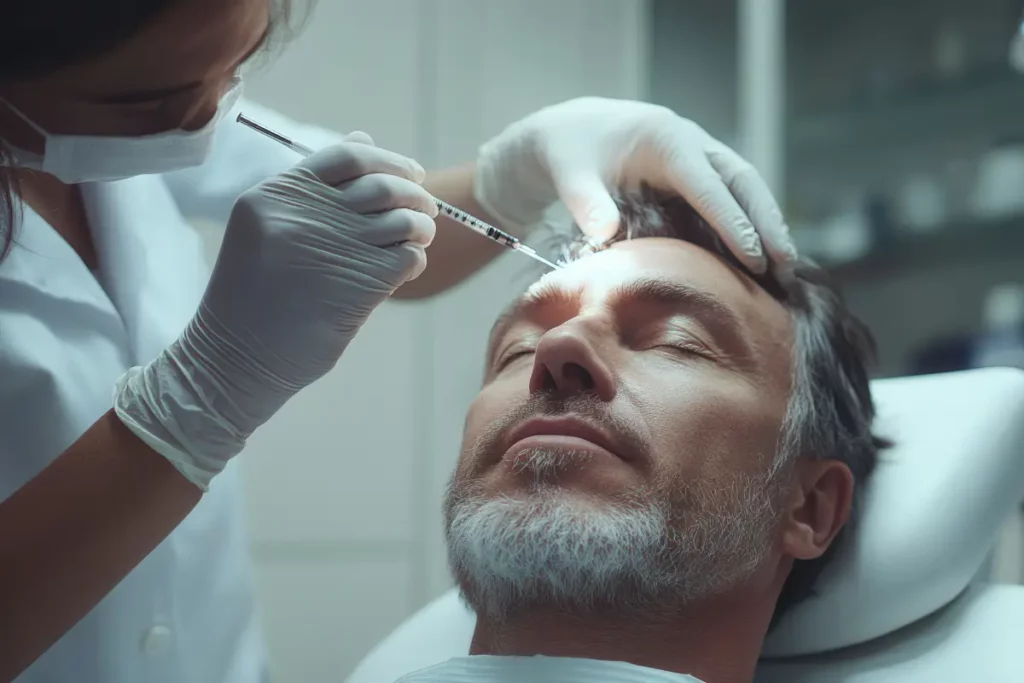
Minimally invasive cosmetic procedures have become increasingly popular for patients who want to improve skin firmness and facial contours without undergoing surgery. One technology that has gained significant attention in aesthetic medicine is PDO threads.
At DermAlign Medical Aesthetics in Langhorne, Pennsylvania, patients often ask what PDO threads are and how they work beneath the skin. Understanding the science behind these dissolvable sutures can help patients learn how modern aesthetic treatments support collagen production and improve skin structure.
This article provides a clear introduction to what PDO threads are, how they function in the skin, and why they are widely used in aesthetic medicine.

What Are PDO Threads
PDO threads are medical-grade sutures made from polydioxanone, a synthetic biodegradable material that has been used in surgical procedures for decades. These sutures are designed to dissolve naturally within the body after supporting tissue during healing.
In aesthetic medicine, PDO threads are placed beneath the skin to help support soft tissue and stimulate the body’s natural production of collagen.
PDO thread treatments are commonly used in aesthetic medicine to support facial contours and stimulate collagen production. These procedures are often referred to as a PDO thread lift, and depending on the treatment area may also be described as a PDO threads facelift, PDO thread face lift, PDO threads neck lift, or a non-surgical facelift.
Because the threads are absorbable, the body gradually breaks them down after placement. PDO threads typically dissolve within four to six months, while the collagen produced around the threads may help improve skin structure for up to 12–18 months.
The Medical Origins of PDO Threads
PDO threads were originally developed for surgical procedures rather than cosmetic treatments. The material polydioxanone has been used in medicine since the 1980s as a dissolvable surgical suture.
These sutures are commonly used in procedures such as:
- Cardiovascular surgery
- Orthopedic surgery
- General surgical wound closure
PDO sutures are widely used in medicine because they are:
- Biocompatible
- Flexible and durable
- Fully absorbable
- Well tolerated by surrounding tissue
Because PDO is compatible with human tissue and dissolves naturally over time, it became an ideal material for aesthetic procedures.
For additional medical information about thread lift procedures using dissolvable sutures, the American Society of Plastic Surgeons provides an overview: https://www.plasticsurgery.org/cosmetic-procedures/thread-lift
What Is Polydioxanone (PDO)
Polydioxanone is a synthetic biodegradable polymer designed specifically for medical use inside the body.
One of its key properties is that it dissolves gradually after placement. PDO breaks down through a process called hydrolysis, where water molecules within the body slowly degrade the material.
Important characteristics of polydioxanone include:
- High tensile strength
- Gradual absorption rate
- Minimal tissue irritation
- Compatibility with human tissue
Because of these properties, PDO has become one of the most widely used materials for absorbable surgical sutures worldwide.
How PDO Threads Work Beneath the Skin
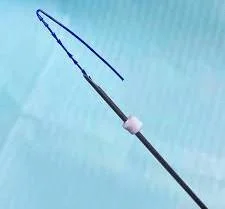
When PDO threads are placed beneath the skin, they stimulate several natural biological responses. The first is to reposition skin, giving a lifted effect. The presence of the threads also activates the body’s natural healing process, which leads to increased collagen production and improved skin structure over time.
Collagen Production
Collagen is the primary structural protein responsible for maintaining skin firmness and elasticity.
As people age, collagen production naturally declines. Research shows that adults lose approximately 1% of collagen per year beginning in their early twenties, which contributes to wrinkles and skin laxity over time.
PDO threads stimulate fibroblasts, the cells responsible for producing collagen. This encourages the body to create new collagen around the threads.
Fibroblast Activation
Fibroblasts play an essential role in maintaining healthy skin.
When PDO threads are placed beneath the skin, fibroblast activity increases and begins producing important components that support skin structure, including:
- Collagen
- Elastin
- Hyaluronic acid
These substances help improve skin elasticity, density, and overall skin quality.
Support for Skin Structure
In addition to stimulating collagen production, PDO threads can help support the underlying skin structure.
When strategically placed beneath the skin, the threads help reinforce areas where mild skin laxity may develop, particularly in the face and neck.
Areas That PDO Threads Can Improve
PDO threads can be used in several areas of the face and neck where early signs of aging appear. These treatments focus on improving skin firmness, supporting facial contours, and encouraging collagen production.
At DermAlign Medical Aesthetics in Langhorne, PDO threads are often incorporated into treatments that address common concerns related to skin laxity and facial aging.
Face
PDO threads may improve areas such as:
- Cheeks
- Jawline
- Nasolabial folds
- Marionette lines
- Brow area
These placements are often part of treatments designed to support facial contours and address mild skin laxity, commonly referred to as a PDO thread facelift.
Neck
The neck often shows early signs of aging due to thinner skin and reduced collagen production.
PDO threads may also be placed in this area to improve early skin laxity. This approach is sometimes referred to as a PDO threads neck lift.
How Long PDO Threads Last
PDO threads remain in the body temporarily before dissolving.
Typical timeline:
- Immediate support after placement
- Collagen production begins within several weeks
- Threads dissolve within 4–6 months
- Collagen remodeling continues for 12–18 months
Safety of PDO Threads
PDO sutures have been widely used in medicine for decades and are considered safe when used appropriately.
Treatments using PDO threads should always be performed by trained medical professionals with experience in facial anatomy.
At DermAlign Medical Aesthetics, treatments are performed by Ekata Rushi, PA-C.
Learn more about our provider:
https://dermalignmedspa.com/meet-our-provider/
Learn More About PDO Threads in Langhorne, Pennsylvania
Understanding what PDO threads are can help patients explore minimally invasive options for improving skin firmness and facial contours.
At DermAlign Medical Aesthetics in Langhorne, Pennsylvania, we focus on personalized aesthetic treatments tailored to each patient’s goals.
View real patient results in our Before & After gallery: https://dermalignmedspa.com/before-and-after/
If you would like to learn more about PDO thread treatments or schedule a consultation, our team would be happy to help.
Contact DermAlign Medical Aesthetics today:
https://dermalignmedspa.com/contact-us/
Frequently Asked Questions About PDO Threads
1) What are PDO threads made of?
PDO threads are made from polydioxanone, a biodegradable polymer commonly used in medical sutures.
2) How long have PDO threads been used in medicine?
PDO sutures have been used for over 30 years.
3) Do PDO threads stay in the body permanently?
No. PDO threads dissolve naturally within four to six months.
4) What happens when PDO threads dissolve?
Collagen continues to develop around the treatment area, helping support skin structure.
5) Do PDO threads stimulate collagen?
Yes. PDO threads activate fibroblasts that produce collagen and elastin.
6) Where can PDO threads be used?
PDO threads may be used in areas such as the cheeks, jawline, neck, and brows.
7) Are PDO threads the same as dermal fillers?
No. PDO threads support tissue and stimulate collagen production, while fillers restore volume.
8) What cosmetic procedures use PDO threads?
PDO threads are commonly used in minimally invasive facial rejuvenation procedures.
9) Are PDO threads safe?
PDO sutures are widely used in medicine and are generally safe when performed by trained professionals