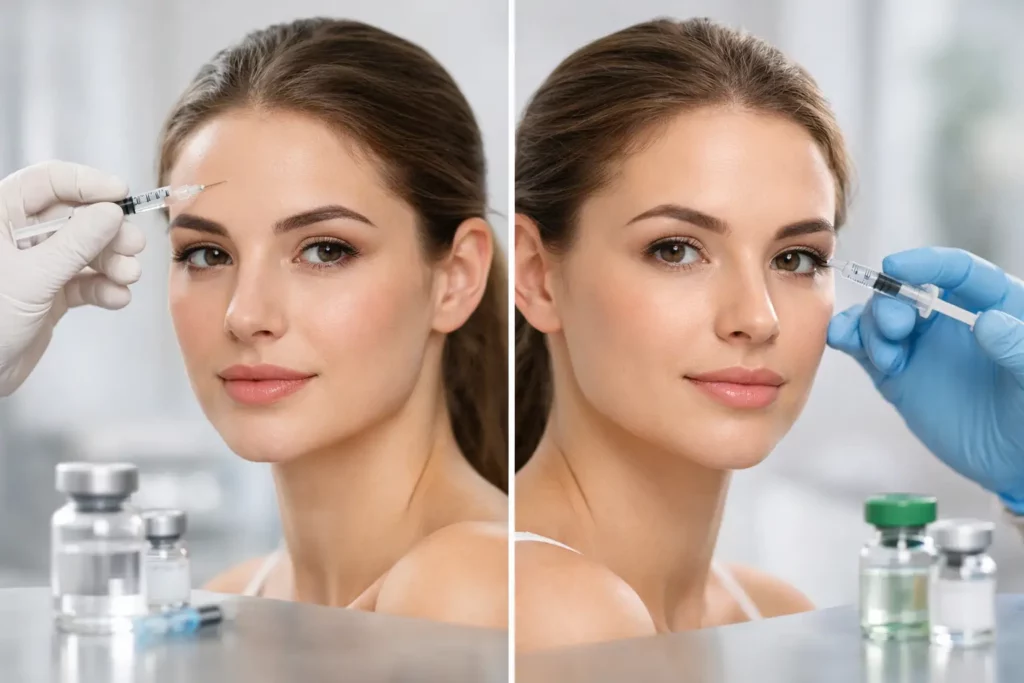

You booked your treatment, loved the early smoothing, and then a few weeks later found yourself wondering, why does my botox go away so quickly? It is a frustrating experience, especially when you expected results to last three to four months. The good news is that fast-fading Botox is usually explainable, and often preventable with the right treatment plan.
Botox does not wear off at exactly the same rate for every person, every area, or every appointment. A result that seems short-lived does not always mean something went wrong. It often means your facial anatomy, muscle strength, dosing, lifestyle, or product choice needs a closer look.
Why does my Botox go away so quickly in some people?
Botox longevity depends on far more than the product itself. Most patients will see results last around three to four months, but that range is only a general guideline. Some people metabolize neurotoxins faster, some have stronger facial muscles, and some need a different injection pattern to get a better hold.
Treatment area matters too. The forehead, frown lines, crow’s feet, jawline, and neck do not all behave the same way. Areas with frequent movement or stronger muscle pull can start showing motion sooner than softer, smaller treatment zones.
There is also a difference between Botox wearing off quickly and Botox never fully taking effect. If your treatment did not peak properly within 10 to 14 days, the issue may be dose, placement, dilution, or product selection rather than early fading.
The most common reasons Botox fades faster
Your muscles may be stronger than average
Some patients naturally have powerful facial expression muscles. This is common in people who are very expressive, have deep frown habits, or have built strong movement patterns over time. If the dose is too conservative for your anatomy, the medication may soften movement but not hold it long enough.
This is one reason expert assessment matters. A customized plan should account for how hard your muscles pull, not just where the lines sit when your face is still.
Your dose may have been too low
Many patients ask for a natural look, which is a very reasonable goal. But natural should not mean underdosed. If too few units are used, especially in stronger areas like the glabella or masseters, the effect may wear off sooner simply because there was not enough product to begin with.
This can happen when pricing drives decision-making more than clinical planning. Lower unit counts may cost less upfront, but they can leave you back in the treatment chair earlier than expected.
Placement matters as much as product
Botox is not a one-size-fits-all treatment. Injection depth, location, and distribution influence how evenly and how long the product works. If the pattern does not match your facial movement, some muscles may still overpower the treatment.
That is why experience and precision matter. A careful injector studies your muscle activity at rest and in motion, then adjusts placement to support balanced, natural-looking results.
Your body may metabolize it quickly
Some people simply process neurotoxins faster. This can be related to metabolism, activity level, muscle mass, and individual biology. Patients who exercise intensely and frequently sometimes notice a shorter duration, although this is not universal.
If you are someone whose Botox consistently fades early, it does not mean you are doing anything wrong. It may mean you need shorter maintenance intervals, a different dosing strategy, or another neurotoxin such as Dysport, Jeuveau, or Xeomin.
The treatment area may be working against longevity
The forehead is a common example. It is a delicate area because the injector must balance wrinkle softening with preserving brow position and natural movement. In some cases, a cautious dose is appropriate, but that also means results may not last as long as they do in the frown lines.
Around the eyes, repeated smiling and squinting can also bring motion back sooner. In the lower face and neck, muscle patterns are more complex, so maintenance can vary even more.
What can make Botox wear off faster after treatment?
Patients often worry they caused the product to fail by bending over, touching their face, or sleeping on one side. In most cases, these common post-treatment concerns are not the real reason Botox fades early. While aftercare matters, it usually does not explain a major drop in longevity weeks later.
More relevant factors include high muscle activity, frequent strenuous workouts, and long gaps between treatments that allow muscles to fully regain strength before the next visit. When treatments are done consistently, muscles often become easier to manage over time.
Stress may play a role indirectly as well. People under stress can increase facial tension, frowning, jaw clenching, and repetitive expression patterns, which can make it seem like Botox is wearing off faster.
Could I be resistant to Botox?
True resistance is possible, but it is not the first explanation in most cases. Some patients worry they have “stopped responding” to Botox when the more likely cause is underdosing, incorrect placement, or unrealistic expectations about duration.
That said, if you have had repeated treatments over time and your results have become dramatically shorter or weaker despite appropriate dosing, your provider may consider whether switching products makes sense. Some patients respond differently to various neurotoxins. This is one reason a broad aesthetic practice can offer value – the plan can be adjusted instead of forcing the same product for every face.
Why your friend’s Botox lasts longer than yours
This is one of the most common comparison traps in aesthetics. Your friend may be getting a different number of units, treating different muscles, using a different neurotoxin, or simply having a different biological response.
Age is only one piece of the puzzle. Younger patients with strong expression muscles can burn through results quickly, while older patients with less dynamic movement may see longer-lasting effects in certain areas. Men also often require more units because muscle mass tends to be greater.
The better question is not whether your Botox lasts as long as someone else’s. It is whether your treatment plan was built specifically for your face and your goals.
How to make Botox last longer
If you keep asking, why does my botox go away so quickly, the answer may be that your maintenance strategy needs refinement. Small changes can make a meaningful difference.
A thorough consultation is the first step. Your injector should assess your muscle activity, review your past response, and talk honestly about whether your previous dose was enough. If your results consistently fade at eight weeks, that pattern matters.
Consistency also helps. Waiting too long between appointments can allow muscles to return at full strength, making each session feel like starting over. Some patients do best on a 10- to 12-week schedule rather than stretching treatment longer.
Product choice can matter too. Botox is a trusted and effective option, but it is not the only one. Some patients find they prefer the feel, onset, or duration of Dysport, Xeomin, or Jeuveau in certain areas.
It is also worth considering the bigger picture. If etched lines remain visible even when muscle movement is reduced, Botox alone may not create the result you want. Skin quality, collagen loss, and static lines sometimes need combination treatment, such as medical-grade skincare, microneedling, PRP, or other rejuvenation options.
When to talk to your injector
If your Botox is fading before the two-month mark, bring it up. If one side wore off much faster than the other, mention that too. The most useful follow-up happens when patients share timelines, photos, and specific concerns instead of assuming quick fading is just something they have to accept.
A thoughtful injector will not treat that conversation as a complaint. They will treat it as clinical feedback. That is how dosing becomes more precise, product selection becomes more strategic, and outcomes become more reliable over time.
At DermAlign Medical Aesthetics, this is exactly why personalized treatment planning matters. Neurotoxin appointments should never feel transactional. They should be built around your anatomy, your lifestyle, and the natural, refreshed result you actually want to maintain.
If your Botox seems to disappear faster than expected, do not assume you are a bad candidate. More often, it means your face is asking for a more tailored approach – and that is something a skilled aesthetic provider can work with.