 Skip to content
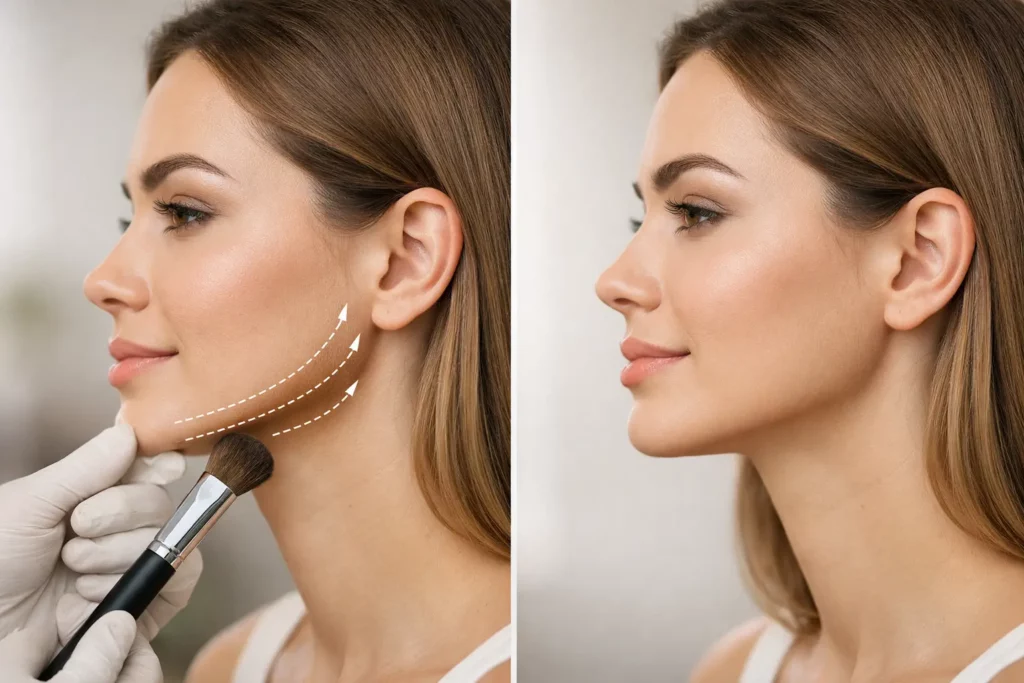
A side profile can change the way your whole face reads. Sometimes the issue is not a dramatic feature at all – it is a softer chin, a little fullness under the jaw, or mild skin laxity that blurs definition. That is why chin contouring without surgery has become such a sought-after option for patients who want a more sculpted look without the downtime, scars, or long recovery that come with surgery.
Table of Contents
ToggleFor many adults, the goal is not to look different. It is to look more balanced, more refreshed, and more confident in photos, on video calls, and in everyday life. The chin and jawline play a bigger role in facial harmony than most people realize, and small changes in this area can make a meaningful difference.
What chin contouring without surgery can address
Non-surgical chin contouring is not one single treatment. It is a category of treatments used to improve the shape, projection, and definition of the chin and lower face. The right plan depends on what is causing the concern in the first place.
Some patients have a chin that appears recessed or under-projected. Others are more bothered by submental fullness, often called a double chin. Some notice early jowling, loose skin, or age-related volume changes that soften the jawline. In many cases, it is a combination of these factors, which is why a customized assessment matters.
This is also where expectations need to stay grounded. Non-surgical options can create beautiful improvement, but they do not replace every surgical result. If someone has significant skin laxity or structural concerns, surgery may still offer the most dramatic correction. For the right candidate, though, minimally invasive treatment can deliver visible refinement with less interruption to daily life.
The most common treatments used for chin contouring without surgery
Dermal filler for projection and shape
If the chin looks short, weak, or less defined from the side, dermal filler can add projection and improve proportion. Strategic placement can make the lower face appear longer, cleaner, and more balanced with the lips, nose, and jawline.
This option is often ideal for patients who want immediate improvement and appreciate the flexibility of a non-permanent approach. Results are visible right away, though there can be temporary swelling. The trade-off is maintenance. Fillers are not forever, and the exact longevity depends on the product used, your metabolism, and the treatment area.
A skilled injector is especially important here. The chin is not a place for guesswork, because a few millimeters can affect the entire facial profile. Done well, filler should enhance structure without making the face look heavy or overdone.
Kybella or injectable fat reduction for fullness under the chin
When the main issue is stubborn fullness beneath the chin, injectable fat-dissolving treatment may be a strong fit. Kybella is one of the best-known options for reducing submental fat. It works gradually by breaking down fat cells in the treated area, helping create a slimmer and more defined profile over time.
This can be a great solution for patients who feel frustrated by a double chin that does not improve with diet and exercise. Even people at a healthy weight can carry fullness in this area due to genetics.
The biggest thing to know is that this is not an instant-result treatment. It typically requires a series of sessions, and swelling afterward can be noticeable for several days. For many patients, that is a worthwhile trade-off for a non-surgical option that targets localized fat.
PDO threads for support and definition
If mild skin laxity is softening the jawline, PDO threads may help create a more lifted, supported appearance. These dissolvable threads are placed beneath the skin to reposition tissue and stimulate collagen.
Threads can be useful when the concern is less about fat or projection and more about early sagging. They are not the right answer for everyone, especially if laxity is advanced, but for selected patients they can offer subtle, elegant improvement with less downtime than surgery.
Results from threads can be satisfying, but they tend to be more nuanced than some patients expect. This is a contouring and support treatment, not a facelift substitute. The best outcomes happen when patients understand that refinement, not dramatic transformation, is the goal.
Biostimulatory treatments and collagen support
Sometimes chin and jawline contouring is helped by improving skin quality and structural support rather than simply adding volume. Treatments that stimulate collagen can improve firmness and texture over time, which may enhance the overall contour of the lower face.
These options are often part of a broader treatment plan rather than a standalone fix. They work well for patients interested in gradual improvement and long-term skin support.
Who is a good candidate?
The best candidates for chin contouring without surgery are patients who want visible enhancement but prefer to avoid anesthesia, incisions, and extended recovery. They often have mild to moderate concerns, realistic expectations, and a strong interest in natural-looking results.
A good consultation should look at the full lower face, not just the chin in isolation. Chin projection, jawline shape, skin elasticity, neck fullness, and facial proportions all matter. Sometimes the area that seems to be the problem is actually being affected by another feature nearby.
For example, a patient may think they need jawline contouring when the real issue is a recessed chin. Another may focus on the chin when under-chin fat is actually the main source of imbalance. Proper assessment helps avoid overtreating one area while missing the root cause.
What results should you realistically expect?
This is where experience and honest guidance make a difference. A thoughtful provider will explain what is possible, what is not, and whether one treatment or a combination approach makes the most sense.
If your concern is shape and projection, filler may offer the quickest visible change. If fullness under the chin is the issue, fat reduction treatments usually take more patience. If skin laxity is contributing, threads or collagen-focused treatments may improve definition, but not to the same extent as surgery in more advanced cases.
In other words, the answer is rarely one-size-fits-all. Great contouring is about balance. The goal is to help the chin and jawline work better with the rest of the face, not to create a trendy or exaggerated look.
Why personalization matters in lower-face contouring
The chin is one of the easiest areas to overtreat when an injector follows a formula instead of a facial assessment. Men and women often need different contouring approaches. Younger patients may want sharper definition, while mature patients may benefit more from subtle support and restoration. Ethnicity, bone structure, skin thickness, and aging pattern all influence the plan.
That is why consultation-driven care matters so much. At DermAlign Medical Aesthetics, treatment planning is centered on one-on-one evaluation, education, and precision. Patients are guided through their options clearly, with attention to safety, anatomy, comfort, and the kind of result that will still feel like them.
That level of customization is not a luxury add-on. It is what helps protect natural-looking outcomes.
Questions worth asking before treatment
Before moving forward, ask what is actually causing your concern, how many sessions may be needed, what downtime to expect, and how long results are likely to last. You should also understand the cost of maintenance, especially with treatments that require upkeep over time.
Transparency matters here. Some options have a higher upfront cost but longer-lasting improvement, while others are more flexible but need repeat visits. Neither is automatically better. It depends on your goals, timeline, and comfort level.
You should also feel comfortable asking about injector training and experience with lower-face anatomy. Chin and jawline contouring can look elegant and understated, but the work behind that result is highly technical.
Chin contouring without surgery is about more than profile photos
Patients often come in focused on one complaint – the double chin in pictures, the softer jawline on Zoom, the way the lower face seems less defined than it used to be. What they usually want, though, is a greater sense of confidence. They want their reflection to feel more aligned with how they see themselves.
That is what makes non-surgical contouring so appealing when it is done well. It respects your existing features while refining the details that affect facial harmony. The right treatment plan should not chase perfection. It should create improvement that looks polished, believable, and tailored to you.
If you have been wondering whether this area can be improved without surgery, the answer is often yes – but the best next step is a personalized evaluation, not a guess based on someone else’s before-and-after. The most flattering results start with a plan built around your anatomy, your goals, and your comfort level.


