Skip to content
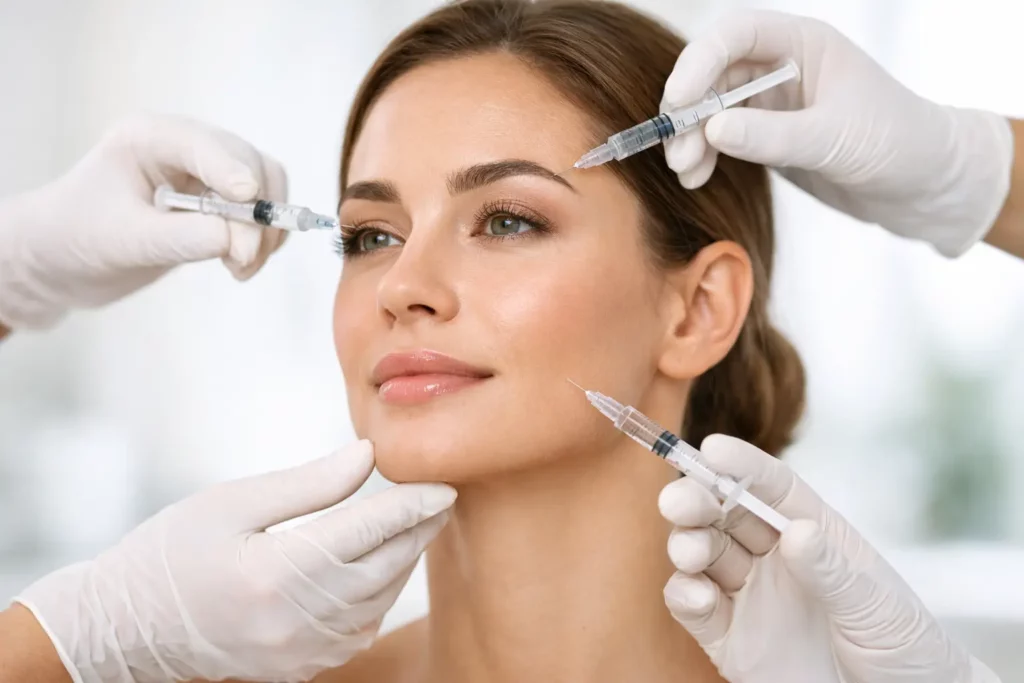
A lot of people ask the same question before booking their first consultation: what areas can be treated with fillers? The short answer is more places than most expect. Fillers are not just for lips, and they are not a one-size-fits-all treatment. In skilled hands, they can soften shadows, restore volume, improve facial balance, and refine certain features without making you look overdone.
Table of Contents
ToggleThe key is choosing the right product, the right placement, and the right amount. A thoughtful treatment plan should respect your natural anatomy, your age, your goals, and how subtle or noticeable you want the change to be.
What areas can be treated with fillers on the face?
Dermal fillers are commonly used throughout the face to restore volume that has been lost with age or to enhance areas that have always felt less defined. Some patients want a refreshed look. Others want more contour. Both goals can be valid, but they require different approaches.
The most frequently treated areas include the lips, cheeks, chin, jawline, under-eyes, smile lines, marionette lines, temples, and around the mouth. In some cases, fillers can also be used in the nose for nonsurgical refinement or in the lower face to support a tired or sagging appearance.
What matters most is not how many areas can be treated, but which areas should be treated for your face. Sometimes one well-chosen area creates the biggest improvement. Sometimes balancing two or three areas produces a more natural result than treating a single feature alone.
Lips
Lip filler remains one of the most requested treatments, but modern lip enhancement is not only about adding volume. Fillers can improve lip shape, define the border, correct asymmetry, and restore hydration and structure to lips that have thinned over time.
For younger patients, the goal is often refinement or a soft, fuller look. For mature patients, filler may help replace volume loss and reduce lipstick lines around the mouth. The trade-off is that more product is not always better. Overfilled lips can distort facial balance, which is why a conservative approach usually ages better and looks more polished.
Cheeks
Cheek filler can make a face look more rested almost immediately. As we age, volume shifts and diminishes in the midface, which can create flattening, heaviness, and deeper folds around the nose and mouth. Restoring support in the cheeks can lift the overall look of the face without surgery.
This area is especially important because it often affects neighboring features. A patient may think the problem is the smile lines, when the real issue is a lack of support higher in the face. Treating the cheeks first can sometimes reduce the need for filler elsewhere.
Under-eyes
The under-eye area can be one of the most transformative and one of the most technique-sensitive places for filler. When done well, filler can soften hollowness and reduce the tired look caused by a tear trough depression.
This is not the right treatment for everyone. Puffiness, poor skin elasticity, or certain anatomical concerns may make under-eye filler a less ideal option. In those cases, a responsible injector should say so. This is one area where individualized evaluation matters more than trend-driven demand.
Smile lines and marionette lines
Nasolabial folds, often called smile lines, run from the sides of the nose toward the corners of the mouth. Marionette lines extend downward from the mouth and can contribute to a sad or heavy expression. Fillers can soften both areas, but direct treatment is not always the first step.
If the cheeks or lower face have lost structural support, placing filler only into the lines may create a heavier result. A more balanced plan may involve restoring support in adjacent areas first, then refining the folds if needed. This is why natural-looking filler tends to come from full-face assessment, not treating isolated wrinkles in a vacuum.
Chin and jawline
Chin and jawline filler can significantly improve facial harmony. A chin that is recessed or lacks projection can make the nose appear larger, the jawline less defined, and the lower face less balanced. Adding structure to the chin can sharpen profile views and create better proportion.
Jawline filler is popular among both women and men, although the aesthetic goals are often different. Some patients want a cleaner, more sculpted border. Others want to reduce the appearance of jowling or create stronger lower-face definition. Product choice and placement are critical here because the jawline should look crisp, not bulky.
Temples
Temple hollowing is an area many patients do not notice until it is pointed out during a consultation. Volume loss in the temples can make the upper face look skeletal or tired, even if the forehead is smooth.
Filler in the temples can create a softer, healthier transition between the forehead and cheeks. It can also contribute to an overall more youthful facial shape. Because this is a more advanced treatment area, experience and a deep understanding of anatomy are essential.
Around the mouth
Fine lines around the mouth, sometimes called smoker’s lines, can make lipstick bleed and can age the face even in patients with otherwise good skin. Fillers may be used here very carefully to soften etched lines and support the area.
This treatment usually works best when expectations are realistic. Deep static lines may improve, but they may not fully disappear with filler alone. Sometimes a combination approach with skin-focused treatments provides a better outcome than relying on filler as the only answer.
Nose and nonsurgical contouring
In select patients, filler can be used to smooth minor irregularities in the nose or create the appearance of a straighter profile. This is often called a nonsurgical rhinoplasty. It can be a useful option for camouflage, but it does not make the nose smaller and it is not appropriate for every concern.
This area carries higher risk than many others, so it should only be performed by highly trained medical professionals who understand both aesthetics and safety protocols. Precision matters here in every sense.
Can fillers treat areas beyond the face?
When people ask what areas can be treated with fillers, they are usually thinking about the face, but there are other possibilities. Fillers may be used in the hands to restore volume and reduce the visible contrast of veins and tendons. In some practices, they may also be considered for certain body areas, depending on the product and treatment goals.
That said, not every med spa offers every advanced filler application, and not every patient is a candidate. A consultation should always clarify what is safe, appropriate, and likely to give you a result worth the investment.
The best area to treat is not always the area that bothers you most
This is where expert guidance makes a real difference. A patient may come in focused on under-eye circles, but the better correction may start in the cheeks. Someone bothered by jowls may benefit from chin support or jawline contouring. Another patient may request lip filler when what they really need is hydration, skin rejuvenation, or a more balanced lower-face plan.
The most flattering results usually come from restraint and strategy. Filling every line is rarely the goal. Supporting the face in a way that looks refreshed, rested, and naturally you is the better standard.
What to expect from a personalized filler plan
A quality consultation should cover more than where filler can go. It should also address whether filler is the right treatment, how much product may be needed, how long results typically last, and what kind of maintenance makes sense for your goals.
You should expect transparency around pricing, expected downtime, and limitations. Fillers can do a lot, but they cannot replace surgery in patients with significant skin laxity, and they are not meant to freeze movement the way neurotoxins do. The right plan may involve combining treatments over time for a more complete result.
At DermAlign Medical Aesthetics, that personalized approach matters. The goal is not to sell a syringe. It is to recommend a treatment strategy that fits your anatomy, your comfort level, and the version of yourself you want to see in the mirror.
If you have been wondering whether fillers are only for lips or cheeks, the answer is no. They can address a wide range of concerns, but the smartest place to start is with an experienced injector who knows when filler will help, when it will not, and how to keep the result looking elegant and believable.