Skip to content
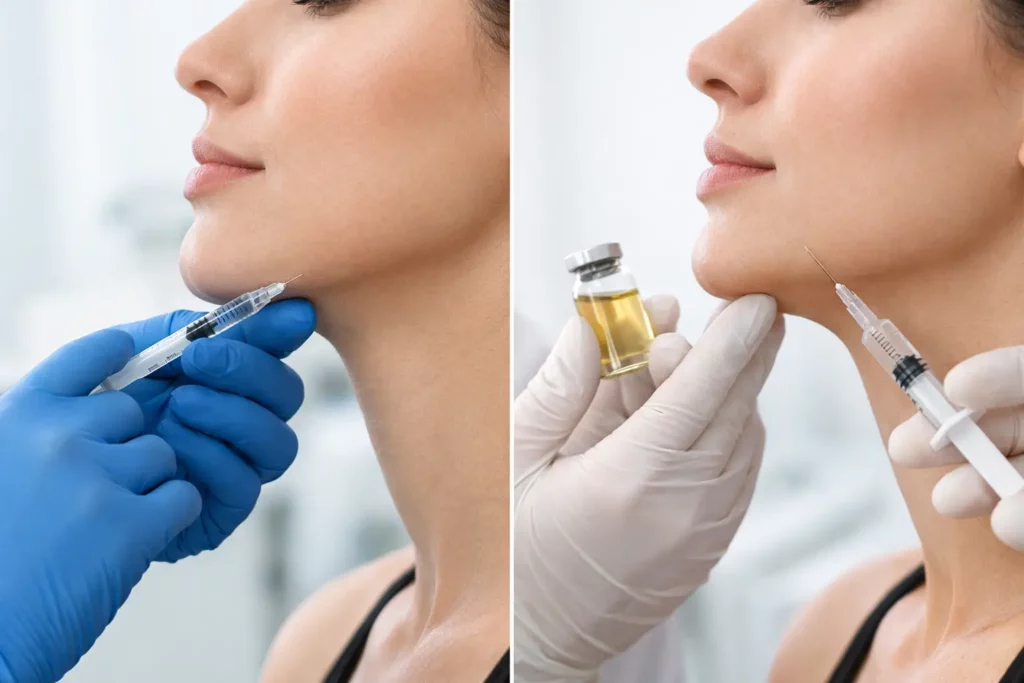
If you are looking at non-surgical options for a double chin, the question usually comes down to this: is PCDC better than Kybella? The honest answer is not a simple yes or no. Both are injectable fat-dissolving treatments, but they are not identical in formulation, treatment approach, recovery, or ideal patient fit.
Table of Contents
ToggleFor some patients, Kybella is the more predictable choice because it is FDA-approved specifically for submental fullness under the chin. For others, PCDC may be a more flexible option when a provider is building a customized treatment plan for small pockets of stubborn fat. What matters most is not which name sounds better, but which treatment aligns with your anatomy, goals, and comfort with downtime.
Is PCDC better than Kybella under the chin?
Under the chin is where this comparison matters most, because that is the area Kybella was designed to treat. Kybella contains synthetic deoxycholic acid, a molecule that helps break down and absorb dietary fat. When it is injected into the correct layer of fat beneath the chin, it destroys fat cells that the body then clears over time.
PCDC, often called PCDC liquid lipo, generally refers to a compounded injectable blend that may include phosphatidylcholine and deoxycholate. It is used by some medical providers for localized fat reduction. The key difference is that Kybella is a branded, FDA-approved product for submental fat, while PCDC is a broader category of compounded treatment that can vary by formulation and protocol.
That means if you are asking which one is better in the most strictly medical and regulatory sense, Kybella has the advantage for the double chin. It has standardized dosing, established clinical use for this area, and a clear treatment indication. If you are asking which one may be better for your personal goals, the answer depends on how much fullness you have, how your jawline is structured, how much skin laxity is present, and how aggressive you want treatment to be.
How the treatments differ in real life
On paper, both treatments target unwanted fat. In real life, the patient experience can feel different.
Kybella is often chosen by patients who want a treatment with a defined protocol and a strong safety profile when performed by a trained injector. It is especially appealing for patients who want to treat moderate fullness under the chin without surgery. The trade-off is downtime. Swelling after Kybella can be significant, especially after the first session, and some patients are surprised by how dramatic that swelling looks for several days.
PCDC may be presented as a more customizable fat-dissolving option. In some practices, it is used in areas beyond the chin, and some providers feel it allows them to tailor treatment more specifically. However, because formulations can differ, the treatment experience can be less standardized from one office to another. That does not automatically make it worse, but it does make provider skill, transparency, and patient education even more important.
Results: which works better?
If your main concern is a soft pocket of fat beneath the chin, both can produce visible improvement. Neither is a one-and-done miracle for most patients. You should expect a series of treatments, gradual change, and some patience while the body metabolizes the treated fat.
Kybella results are usually easier to discuss in a predictable way because the product and protocol are more consistent. Patients often need multiple sessions spaced several weeks apart, and improvement builds gradually. It can work very well for the right candidate, especially when the issue is truly excess fat and not loose skin.
PCDC can also reduce localized fullness, but results may vary more because treatment formulas and injection plans may differ. In experienced hands, it may be an effective option for selected patients. Still, the phrase experienced hands matters here. A careful facial assessment is essential because not every fullness under the chin is caused by removable fat alone.
If someone has significant skin laxity, a heavier neck, or a recessed chin, fat dissolving may help only modestly. In those cases, combining treatments or considering a different approach may make more sense than simply choosing between PCDC and Kybella.
Downtime and side effects
This is often where patients make their decision.
Kybella is known for swelling. Tenderness, firmness, numbness, and bruising are also common during the recovery period. For many people, that trade-off is acceptable because they want a non-surgical option and are comfortable planning treatment around work and social events.
PCDC can also cause swelling, bruising, tenderness, and inflammation. Depending on the formula used and the area treated, recovery can be mild for some and more noticeable for others. Again, because compounded treatments are not always identical across practices, your provider should explain exactly what is being injected, what to expect afterward, and how recovery typically looks in their own patient population.
There is no fat-dissolving injectable that feels completely effortless. If you want visible improvement, you should expect some temporary inflammation. The better question is whether the likely downtime feels worth the likely outcome.
Safety matters more than the brand name
When patients compare options, they often focus on which product is stronger or cheaper. A better place to focus is safety.
Kybella has a defined indication and should be injected carefully to avoid complications such as nerve irritation, unevenness, or poor contouring. PCDC also requires precision, and because it may be compounded, it should only be performed by a qualified medical provider who understands facial anatomy, proper depth, dosing strategy, and candidacy.
This is why a consultation matters. A trained injector should look at your chin from the front and profile, evaluate skin elasticity, assess muscle activity and jawline support, and discuss whether your concern is truly submental fat. If a provider skips that level of evaluation and jumps straight to injections, that is not a good sign.
Who may be a better candidate for Kybella
Kybella may be the stronger option if you have mild to moderate fat under the chin, good skin elasticity, and a preference for an FDA-approved treatment specifically designed for this area. It can also be a good fit if you value a more standardized treatment plan and want clarity around what is being used.
Patients who do best with Kybella usually understand that results take time. They are not looking for overnight change. They want gradual contour improvement without surgery and are willing to tolerate swelling in exchange for that.
Who may consider PCDC
PCDC may appeal to patients who want a more customized fat-dissolving approach and who are being treated by an experienced medical aesthetic provider who uses it selectively and transparently. It may also come up in conversations when a provider is addressing localized fullness in areas where a customized plan makes sense.
That said, customized does not always mean better. Sometimes it means there is less standardization, which puts even more responsibility on the provider to explain the formulation, expected response, number of sessions, and potential risks clearly.
Cost is part of the conversation, but not the whole decision
Some patients ask is PCDC better than Kybella because they are comparing price. That is understandable. Cost matters. But the least expensive option is not automatically the best value if it takes more sessions, produces less predictable improvement, or is not the right match for your anatomy.
A good consultation should include transparent pricing, expected number of treatments, and a realistic discussion of whether the treatment is likely to give you enough improvement to feel it was worth the investment. Sometimes the best answer is not PCDC or Kybella. Sometimes it is tightening the skin, improving chin projection, or discussing whether surgery would offer a cleaner result.
The best treatment is the one that matches your face
The chin and jawline are small areas with a big impact on profile balance. That is why the product matters less than the treatment plan. A patient with a petite chin, early jowling, and mild submental fullness may need a very different strategy than someone with isolated under-chin fat and firm skin.
At a medically guided aesthetic practice, the goal should never be to sell the most injections. It should be to choose the safest, most effective option for the result you actually want to see in the mirror.
If you are comparing these treatments, think beyond the question is PCDC better than Kybella. Ask which one is better for your anatomy, your timeline, your tolerance for downtime, and your desired outcome. That is where the right answer usually becomes clear.
A thoughtful consultation can save you from chasing the wrong fix. When your treatment plan is built around your facial structure instead of a trend, the result tends to look more refined, more natural, and more worth it.