Skip to content
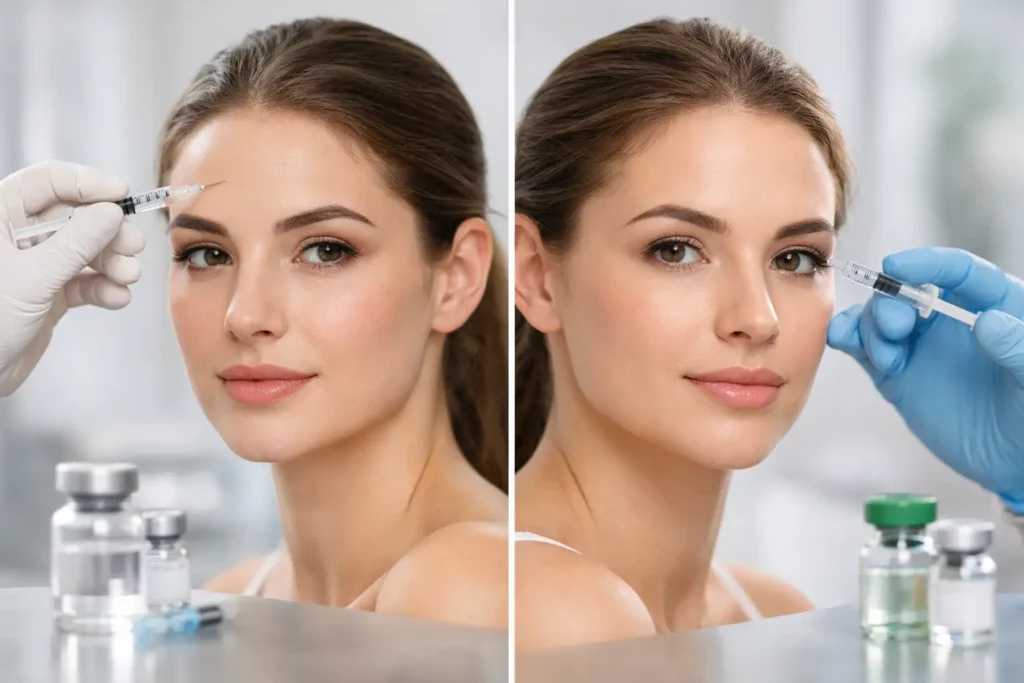
A beautifully placed filler treatment should not announce itself when you walk into a room. It should help you look rested, balanced, and more like yourself. This guide to dermal filler areas explains the parts of the face that can benefit from strategic volume and contouring, as well as why the best treatment plans rarely focus on one feature alone.
Table of Contents
ToggleDermal fillers are injectable gels, most commonly made with hyaluronic acid, that can restore lost volume, soften lines, refine contours, and enhance facial proportion. Treatment is highly individualized. The right areas, amount of product, and injection technique depend on your facial anatomy, skin quality, age-related changes, and the look you want to achieve.
Guide to Dermal Filler Areas: Start With Facial Balance
Facial aging is not simply about wrinkles. Over time, the face can lose volume in the cheeks and temples, structural support along the jawline, and hydration around the lips. This may make folds, shadows, and lower-face laxity appear more noticeable.
A thoughtful filler plan looks at the face as a whole. For example, adding support to the cheek may soften the appearance of nasolabial folds without placing a large amount of filler directly into those folds. Refining the chin can improve the profile and bring greater harmony to the lips and jawline. This approach is why a one-on-one consultation matters: it replaces guesswork with an assessment built around your features.
Common Dermal Filler Areas of the Face
Cheeks and Midface
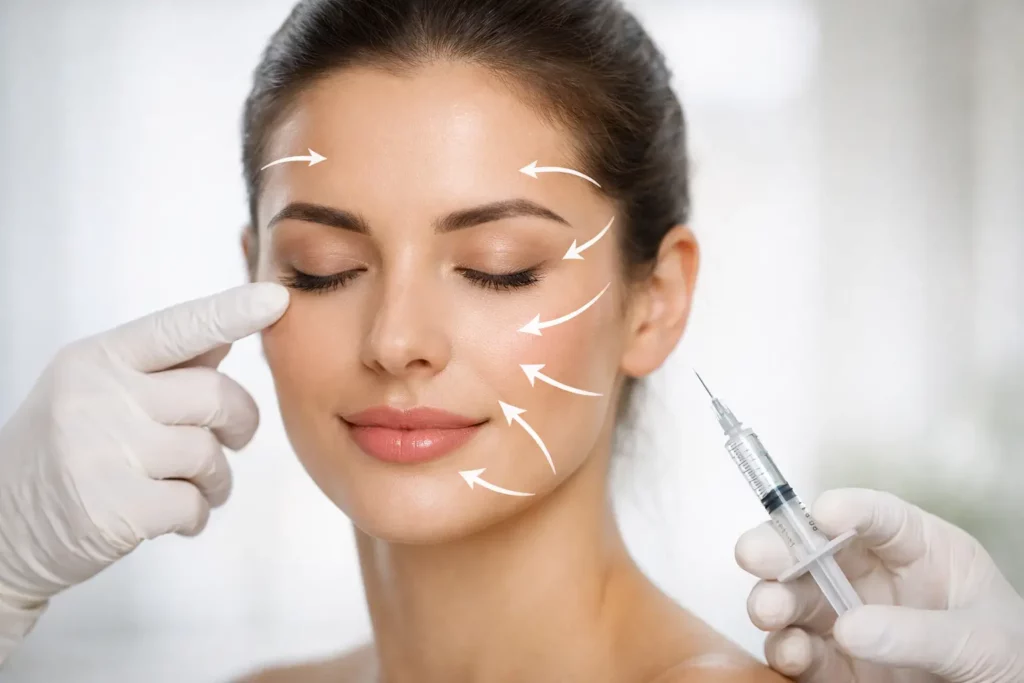
Cheek filler is often chosen to restore the gentle lift and fullness that can diminish with time. It may enhance the cheekbone area, replace lost midface volume, and reduce a tired or hollow appearance beneath the eyes.
For some patients, cheek filler creates a subtle refreshed effect without changing their recognizable appearance. For others, particularly younger patients seeking contour, a more defined cheekbone may be appropriate. The trade-off is that excessive volume or poorly placed product can look heavy, so conservative placement and respect for natural anatomy are essential.
Under-Eye Hollows
Under-eye hollows, sometimes called tear troughs, can cast shadows that make a person appear fatigued even after a good night of sleep. In carefully selected patients, filler can reduce the transition between the lower eyelid and upper cheek.
This is one of the most technically demanding filler areas. It is not right for everyone, especially patients with significant under-eye puffiness, fluid retention, very thin skin, or pronounced laxity. In those cases, cheek support, skin-quality treatments, or a different approach may offer a better result. A qualified injector should assess this area conservatively rather than treating every under-eye concern with filler.
Lips and Lip Lines
Lip filler can do far more than create volume. Depending on your goals, it can define the lip border, improve symmetry, restore hydration, soften vertical lip lines, or replace fullness that has gradually faded over time.
The most flattering lip treatments are proportionate to the rest of the face. Some clients want a softly hydrated, barely-there enhancement; others want more noticeable shape and volume. Both can be appropriate when the lips remain balanced with the chin, nose, and facial structure. Filler around the mouth may also help support fine lines, though movement-related lines can sometimes benefit from a combined treatment plan.
Nasolabial Folds and Smile Lines
Nasolabial folds run from the sides of the nose toward the corners of the mouth. They are a normal facial feature, but they can deepen as cheek volume shifts and skin support changes.
Filler may soften these folds, but completely erasing them is not usually the goal. Overfilling this area can create an unnatural look or add heaviness around the mouth. A skilled plan may begin with the cheeks or midface, then use a small amount of filler directly in the folds only when needed.
Marionette Lines and Corners of the Mouth
Marionette lines extend from the corners of the mouth toward the chin and can contribute to a downturned or serious expression. Loss of support in the lower face, repeated movement, and skin laxity all play a role.
Treatment may include filler near the mouth corners, chin, or jawline rather than filling the lines alone. The goal is to improve support and soften shadows while preserving natural expression. If muscle pull is contributing to a downturned mouth, a neurotoxin may be considered alongside filler.
Chin and Jawline
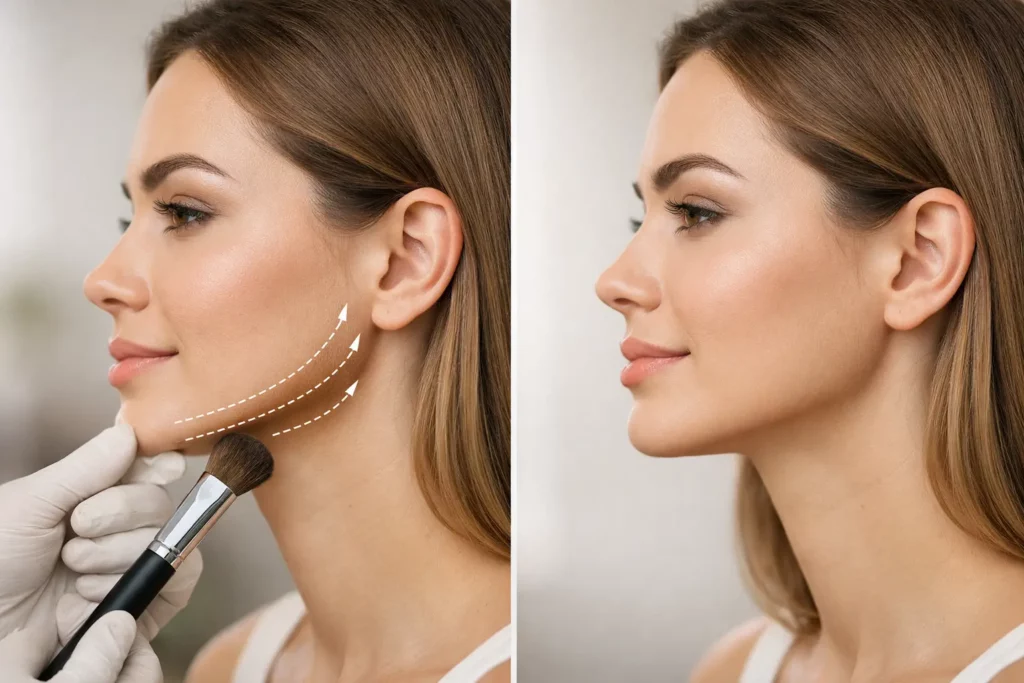
Chin filler can add projection, improve chin shape, smooth a pre-jowl indentation, and create a more balanced profile. It is a powerful option for patients who feel their lower face lacks definition but do not want surgery.
Jawline filler can sharpen the transition from the chin to the jaw, improve symmetry, and create a more structured appearance. Men and women may have different aesthetic goals in this area, but neither should be approached with a one-size-fits-all template. The amount of definition that looks refined on one person may look too strong or too subtle on another.
Temples
Temple hollowing is an often-overlooked sign of facial volume loss. When the temples become more hollow, the upper face can look narrower, more skeletal, or prematurely aged.
Restoring temple volume can create a softer transition from the forehead to the cheeks and may improve overall facial harmony. Because this area contains important blood vessels, it requires advanced anatomical knowledge and careful injection technique. Safety should always outweigh the desire to treat every visible hollow.
Nose and Profile Balancing
In select cases, filler can refine the appearance of the nose by smoothing a small bump, improving symmetry, or creating a more balanced profile. This is sometimes called nonsurgical rhinoplasty.
It is also a high-risk area that demands exceptional expertise. Filler cannot make a large nose smaller, and it is not a substitute for surgical rhinoplasty when significant structural changes are desired. A responsible consultation includes a candid discussion of whether filler is appropriate for your anatomy and goals.
What Determines the Right Filler for Each Area?
Not all fillers behave the same way. Some are softer and more flexible for areas like the lips, while others are designed to provide structure in the cheeks, chin, or jawline. Your provider may also consider whether a product is best used deeply for support or more superficially for fine lines and refinement.
The amount matters just as much as the product. More filler does not automatically mean a better result. Many natural-looking outcomes are created gradually over more than one appointment, allowing your provider to reassess balance after swelling settles and your tissues adapt.
Safety Should Shape Every Treatment Plan
Dermal filler is a medical treatment, not a casual beauty service. Bruising, swelling, tenderness, and temporary asymmetry are common possibilities. More serious complications, while uncommon, can occur if filler enters or compresses a blood vessel. This is why treatment should be performed by a properly trained medical professional who understands facial anatomy, uses appropriate techniques, and has protocols and reversal options available for hyaluronic acid filler.
During your consultation, be open about prior filler, allergies, medications, medical conditions, dental work, and upcoming events. Certain situations may require postponing treatment, including active skin infections, pregnancy or breastfeeding, or recent procedures in the treatment area. The safest plan is always personalized.
How Long Do Results Last?
Longevity varies by filler type, treatment area, metabolism, and movement. Lip filler often needs maintenance sooner than filler placed in a more structural area such as the cheeks or jawline. Results may last several months to more than a year, but no provider should promise an identical timeline for every patient.
You may see an immediate change after treatment, followed by temporary swelling. The more accurate result becomes visible as swelling resolves. Scheduling injections well before a wedding, vacation, or major event gives your face time to settle naturally.
Choosing a Natural-Looking Approach
The most effective filler plans are built around proportion, not trends. Bring inspiration photos if they help communicate your preferences, but expect your provider to translate that goal through the lens of your own facial anatomy. What works beautifully on one face may not be the right choice for yours.
At DermAlign Medical Aesthetics, treatment planning begins with listening – to what you see in the mirror, what feels out of balance, and what level of change feels comfortable for you. The goal is not to chase a different face. It is to create a refined, confident version of your own.
A careful consultation can turn uncertainty about filler areas into a clear plan that respects your features, your comfort, and your long-term goals.