Skip to content
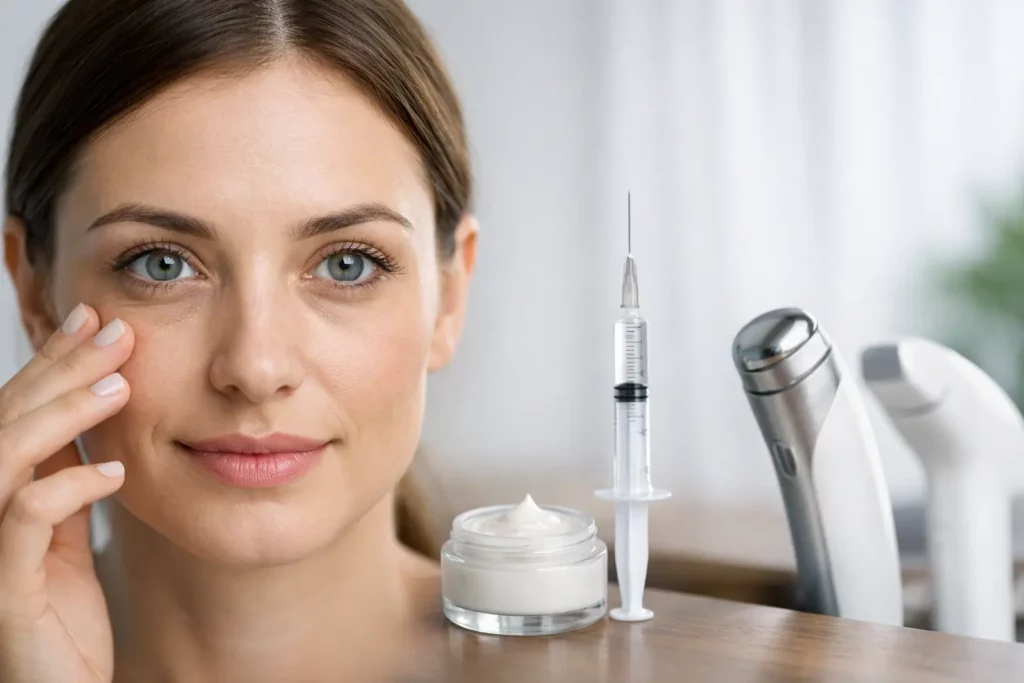
A hollow under the eyes can make a well-rested person look tired, stressed, or older than they feel. The concern is rarely just a dark circle. Often, it is a change in facial contour: a shadowed groove between the lower eyelid and cheek that draws attention even when your skin is healthy and your lifestyle is on track. The right under eye hollow treatment options depend on what is creating that shadow, not simply on how noticeable it looks in the mirror.
Table of Contents
ToggleFor some people, the answer is carefully placed dermal filler. For others, filler could make existing puffiness look worse, and a skin-focused treatment or surgical evaluation may be more appropriate. A thoughtful, in-person assessment is the difference between treating an under-eye concern and trying to camouflage it.
Why Under Eye Hollows Develop
The area beneath the eyes is thin, mobile, and highly individualized. A natural indentation called the tear trough runs from the inner corner of the eye toward the cheek. In youth, there is usually enough smooth volume in the midface to support this transition. With time, collagen, fat pads, bone structure, and skin quality all change, allowing the tear trough to appear deeper.
Genetics can make hollows visible as early as the 20s. Weight loss, dehydration, allergies, poor sleep, sun exposure, and facial aging can intensify the appearance, but they are not always the root cause. In many cases, the issue is structural volume loss in the cheek or a naturally prominent orbital rim rather than a lack of sleep.
It also helps to distinguish hollowness from other common concerns. Brown discoloration may be pigment-related. Blue or purple darkness can reflect visible blood vessels beneath thin skin. Morning puffiness may point to fluid retention or under-eye bags. These concerns can overlap, which is why one treatment does not suit every under-eye area.
Under Eye Hollow Treatment Options That Fit the Cause
Hyaluronic Acid Filler for Restored Support
For the right candidate, hyaluronic acid dermal filler can soften a tear trough and create a smoother transition from the lower eyelid to the cheek. This is usually a precision treatment, not a high-volume one. Small, strategic amounts may be placed in the hollow itself, the upper cheek, or both, depending on where support has been lost.
A conservative approach matters. The under-eye region is delicate, and too much filler can create swelling, a blue-gray cast known as the Tyndall effect, or an overfilled appearance. An experienced medical injector evaluates the entire midface, uses appropriate technique and product selection, and understands when less is more.
One advantage of hyaluronic acid filler is that it is temporary and can be dissolved with hyaluronidase if medically necessary or if the result needs adjustment. Results often appear quickly, while final settling can take time. Longevity varies by product, metabolism, anatomy, and placement, but many patients enjoy improvement for several months to more than a year.
Filler is not automatically the best choice for people with pronounced under-eye bags, significant fluid retention, very thin crepey skin, or a history of persistent swelling after filler. In those situations, adding volume may not create the refined result you want.
Midface and Cheek Filler When the Hollow Starts Lower
Not every tear trough should be injected directly. Sometimes the most natural-looking improvement comes from rebuilding subtle support in the cheeks. As cheek volume shifts downward over time, the contrast between the lid and cheek becomes sharper, making the under-eye hollow look deeper.
Strategically placed cheek filler can lift and smooth the transition without placing product directly beneath the eye. This approach is especially valuable for patients who want refreshed facial balance rather than a treatment that looks isolated to one area. It is also a reminder that facial rejuvenation should be assessed in proportion, not feature by feature.
Collagen-Stimulating Treatments for Gradual Improvement
When the concern includes broader facial volume loss, collagen-stimulating injectables such as Sculptra may be part of a longer-term plan. These treatments work differently from traditional filler. Rather than immediately filling a groove, they encourage the body to build collagen gradually over a series of treatments.
Sculptra is generally used to improve areas of diffuse facial volume loss, such as the temples, cheeks, or lower face. It is not typically a direct tear-trough filler. By restoring overall structure in the appropriate areas, however, it may reduce the contrast that makes under-eye hollows stand out. Results develop gradually and can last longer than many hyaluronic acid fillers, but they require patience and careful planning.
PRP and Microneedling for Skin Quality
PRP-based treatments and microneedling may be helpful when thin texture, fine lines, or dullness contribute to a tired under-eye appearance. Platelet-rich plasma uses concentrated components from your own blood and is commonly paired with microneedling to support skin renewal. These treatments can improve the look of skin quality over time, particularly around the face.
They do not reliably replace meaningful lost volume. If a deep structural hollow is the primary concern, PRP or microneedling alone is unlikely to create the same contour change as filler or an appropriate midface treatment. Still, they can be valuable complements for patients who want to improve both the skin and the shape of the area.
Medical-Grade Skincare and Daily Sun Protection
Skincare cannot fill a deep tear trough, but it can make the eye area look healthier and help protect the investment you make in professional treatments. Medical-grade formulas may support hydration, pigment management, collagen maintenance, and smoother texture. Daily broad-spectrum SPF is especially essential, since ultraviolet exposure can worsen discoloration and accelerate collagen breakdown.
The best eye-area skincare plan is gentle and specific. Strong actives placed too close to the lash line can cause irritation, dryness, or watering that makes the area look worse. A provider can recommend products based on your skin sensitivity, pigment concerns, and current routine.
Surgical Consultation for Bags or Significant Laxity
Some under-eye concerns are better addressed surgically. Lower blepharoplasty may be worth discussing with a qualified oculoplastic or facial plastic surgeon when fat pads are prominent, skin laxity is significant, or the hollow is paired with large bags. In appropriate cases, surgery can reposition or remove fat and address excess skin in ways injectable treatments cannot.
This does not mean surgery is necessary for every hollow. It simply reflects a responsible truth: non-surgical treatments have limits. A reputable aesthetic provider should be comfortable recommending a surgical opinion when it offers the safest or most effective path.
What a Safe Under-Eye Evaluation Should Include
The under-eye area deserves more than a quick assessment under bright overhead lighting. A comprehensive consultation should consider your facial anatomy at rest and in motion, cheek support, skin thickness, symmetry, pigment, allergies, previous filler, medical history, and goals. Good photography and open discussion about what you see in different lighting can be useful, because shadows change dramatically from room to room.
You should also share whether you have had filler in the area before, even if it was years ago. Hyaluronic acid filler can sometimes persist longer than expected, and adding more product without understanding what is already present can lead to avoidable swelling or irregularity.
At DermAlign Medical Aesthetics, one-on-one planning is designed to prioritize natural-looking enhancement, clear recommendations, and informed decision-making. That can mean moving forward with treatment, choosing a gradual plan, or deciding that a particular procedure is not the right fit for your anatomy.
Preparing for Treatment and Managing Expectations
If you are a candidate for injectable treatment, expect some temporary swelling, tenderness, or bruising. These effects are common and often resolve within days, though the under-eye area may take longer to settle for some patients. Avoid scheduling an under-eye treatment immediately before a major event when possible.
Your injector will provide individualized pre- and post-treatment instructions. In general, disclose all medications, supplements, allergies, and health conditions. Do not stop prescription medications unless the clinician who prescribed them advises you to do so. After treatment, follow the guidance you receive and contact your provider promptly if something feels unusual.
The goal is not to erase every line or create a completely flat under-eye area. A natural under-eye contour has dimension. The most attractive outcome usually looks like you slept well, your complexion is brighter, and your face appears more supported, without anyone being able to identify exactly what changed.
A rested, balanced look begins with an honest assessment of the cause. When your treatment plan respects your anatomy and your goals, the under-eye area can look softer, brighter, and unmistakably like you.