Skip to content
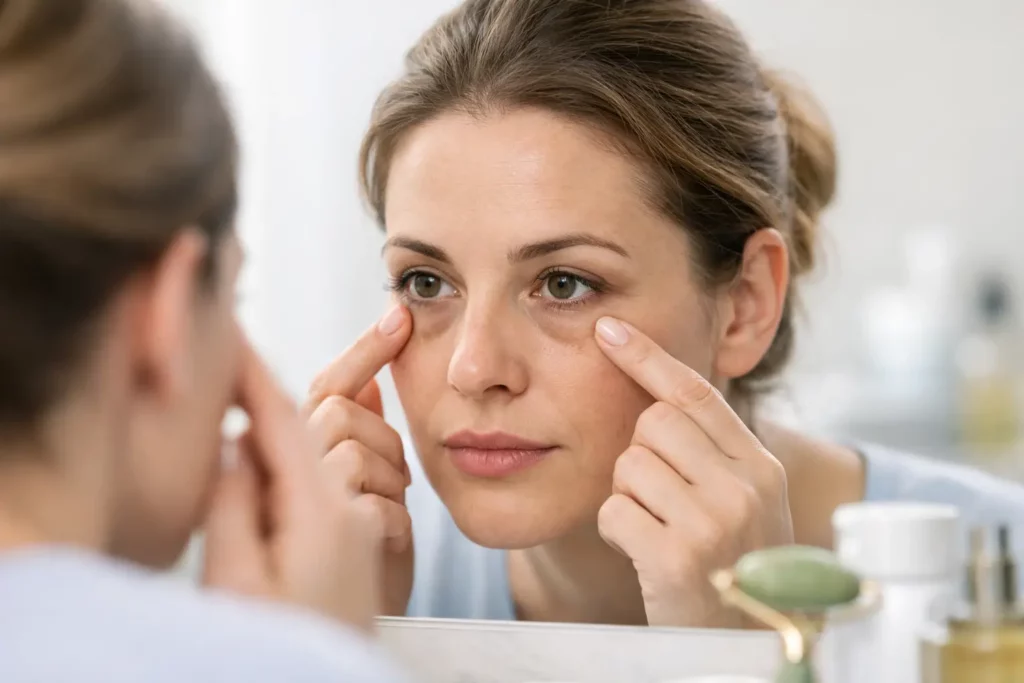
You can sleep eight hours, drink water, and still look tired if the under-eye area is swollen, hollow, or crepey. That is why so many patients ask how to fix baggy under eyes when their face feels rested but their reflection says otherwise. The answer depends on what is actually causing the change, because not every under-eye concern is treated the same way.
Table of Contents
ToggleWhy under-eye bags happen in the first place
Baggy under eyes are usually not one single issue. In some people, the problem is puffiness from fluid retention. In others, it is fat pads that have become more visible with age. Some patients are really dealing with volume loss in the cheeks and tear troughs, which creates a shadow that mimics under-eye bags. Skin laxity, thinning skin, allergies, genetics, and sun damage can all contribute as well.
That is where many people get frustrated. They buy one eye cream expecting a dramatic change, when the real issue may be structural. If the concern is temporary swelling, skincare and lifestyle changes may help. If the area has lost support or developed deeper hollows, treatment often needs to go beyond topical products.
How to fix baggy under eyes at home
If your under-eye area looks worse in the morning, after salty meals, during allergy season, or when you are overtired, there is a good chance swelling is part of the picture. In those cases, simple changes can make a visible difference.
Cold compresses can reduce puffiness, especially first thing in the morning. Sleeping with your head slightly elevated may help limit fluid pooling overnight. If allergies are a trigger, getting them under control often improves the eye area more than people expect. Reducing excess salt and alcohol can help too, particularly if your puffiness comes and goes.
Skincare matters, but it has limits. A well-formulated eye product with caffeine may temporarily reduce the look of swelling. Retinol can support smoother skin texture over time, although the eye area is delicate and should be treated carefully. Hyaluronic acid and peptides can help the skin look more hydrated and refined, which softens a tired appearance. Daily SPF is non-negotiable because UV exposure accelerates collagen loss and thinning skin, both of which make under-eye concerns more noticeable.
The trade-off is that at-home care works best for mild issues. It can improve the look of the skin and reduce temporary puffiness, but it will not reposition fat pads or restore lost facial volume.
When baggy under eyes are really a volume problem
One of the most common reasons patients feel their eyes look older is not true “bags” at all. It is volume loss through the midface and tear trough area. When support in the cheeks diminishes, the transition between the lower eyelid and cheek becomes more pronounced. That contour can cast a shadow and create a tired, sunken, or puffy appearance.
This is why a personalized assessment matters. Treating only the under-eye area without looking at the cheeks, skin quality, and facial balance can lead to underwhelming results. In some cases, restoring support in the midface is what makes the eyes look smoother and more refreshed.
Dermal filler may be considered for carefully selected patients, but technique is everything in this area. The under-eye region is anatomically delicate, and too much product or poor placement can make puffiness worse instead of better. A medically trained injector should assess whether filler is appropriate, whether cheek support should be addressed first, or whether another option would produce a cleaner result.
How to fix baggy under eyes with in-office treatment
If home care is not moving the needle, in-office options can offer a more meaningful improvement. The right treatment depends on whether your concern is puffiness, hollowness, skin laxity, or crepey texture.
Dermal filler for hollowness and shadowing
For patients with tear trough hollows or volume loss, filler can soften the under-eye transition and reduce the tired look. This can be a very elegant treatment when used conservatively and in the right anatomy. It is not ideal for everyone, especially if prominent fat pads or significant swelling are the main issue.
PRP and microneedling for skin quality
If the skin under the eyes looks thin, creased, or dull, regenerative approaches such as PRP and microneedling may help improve texture and overall skin quality. These treatments work differently than filler. They are not primarily adding volume. Instead, they support healthier-looking skin and collagen stimulation over time. Results are gradual, which some patients appreciate because the change looks subtle and natural.
Medical-grade skincare for ongoing maintenance
Prescription-strength or medical-grade skincare can be an important part of an under-eye plan, especially when pigmentation, texture, and dehydration are making the area look older. This is rarely the full solution on its own, but it often improves and maintains the results of in-office care.
When surgery may be the better option
Not every under-eye concern should be treated at a med spa. If the issue is significant fat pad protrusion or more advanced lower eyelid laxity, blepharoplasty may be the most effective path. A trustworthy provider will say that clearly. Good aesthetic medicine is not about pushing one treatment. It is about recommending the approach that matches your anatomy, goals, and timeline.
What not to do when trying to fix baggy under eyes
The under-eye area is one of the easiest places to overtreat. More product is not better here. Chasing a perfectly smooth lower lid can create heaviness, puffiness, or an unnatural look.
It is also easy to self-diagnose incorrectly. Many patients assume all under-eye darkness means they need filler, when pigmentation, visible vessels, or skin thinning may be the bigger issue. Others focus only on the eyes when cheek volume loss is actually driving the problem. That is why consultation-based treatment planning matters.
Be cautious with aggressive DIY trends as well. Harsh exfoliants, poorly placed at-home devices, and random social media hacks can irritate this delicate skin and make the area look worse. Under-eye rejuvenation responds best to precision, not trial and error.
What a personalized plan should include
A strong treatment plan starts with a close look at your facial structure, skin quality, medical history, and day-to-day habits. It should also include a conversation about what bothers you most. Some patients want to reduce morning puffiness. Others want to look less tired in work meetings or family photos. Those are different goals, and the plan should reflect that.
In a consultation, a provider should assess whether your concern is primarily fluid retention, genetics, aging-related volume loss, or skin laxity. From there, treatment may involve one approach or a combination. For example, someone with mild puffiness and crepey skin may do well with skincare, PRP, and lifestyle changes. Someone with hollowness through the tear trough and cheek may need a more structural approach. Someone with pronounced fat pads may be better served by a surgical referral.
At DermAlign Medical Aesthetics, that kind of one-on-one evaluation is central to the process. The goal is not to chase trends. It is to create a safe, tailored plan that helps you look refreshed without looking overdone.
How long does it take to see improvement?
That depends on the solution. Cold compresses and caffeine-based eye products may reduce swelling temporarily within hours. Skincare takes weeks to months. PRP and microneedling typically require a series and improve gradually as collagen response builds. Filler can show visible improvement quickly, although final results are best judged after any initial swelling settles.
This is worth keeping in mind if you have a deadline like a wedding, reunion, or professional event. Some options offer quick cosmetic improvement, while others are better for long-term correction and maintenance.
A better way to think about under-eye rejuvenation
If you are trying to figure out how to fix baggy under eyes, the best next step is not guessing which product or treatment is trending. It is understanding whether you are dealing with puffiness, volume loss, skin changes, or a mix of all three. Once the cause is clear, the solution becomes much more precise.
The eye area does not need dramatic change to look better. Often, the most beautiful result is simply looking less tired, more rested, and more like yourself.