Skip to content
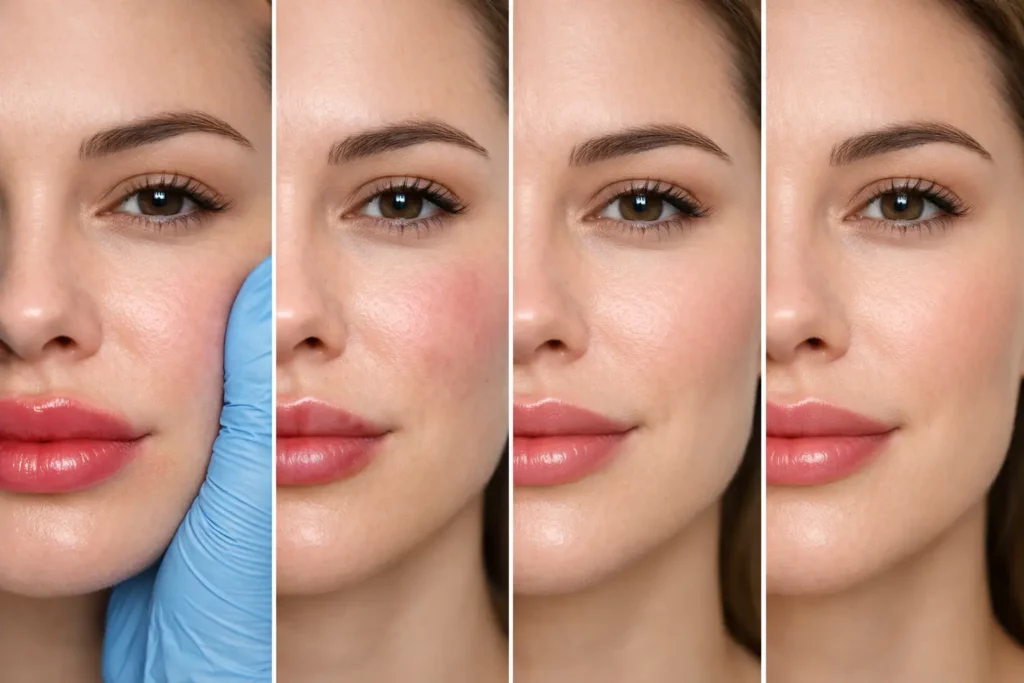
If you look in the mirror a few hours after treatment and think, these cannot be my final lips, take a breath. The lip filler swelling timeline day 1 – day 14 is rarely linear, and the first few days can look noticeably fuller, firmer, and more uneven than the final result. That does not automatically mean anything went wrong. In most cases, it means your lips are doing what injected tissue does – reacting, holding fluid, and settling gradually.
Table of Contents
ToggleLip filler is one of the most rewarding treatments for shape, hydration, and balance, but it also tends to swell more dramatically than filler placed in other areas of the face. Lips are vascular, mobile, and sensitive. Even when treatment is performed with precision, the tissue can respond with puffiness, tenderness, and bruising before it softens into a more natural look.
Lip filler swelling timeline day 1 to day 14
There is no single recovery pattern that fits everyone. Your swelling depends on your anatomy, how much product was placed, the injection technique, your history with filler, whether you bruise easily, and even small things like exercise, salt intake, and sleeping position. Still, most patients follow a similar general timeline.
Day 1
The first 24 hours are usually the most surprising. Your lips may look significantly larger than expected, feel tight, and appear slightly uneven from side to side. This is often a combination of filler volume, local swelling, and tiny areas of trauma from the injections themselves.
You may also notice redness at entry points, pinpoint bleeding, tenderness, and early bruising. Some patients feel only mild fullness. Others swell quickly and dramatically, especially if they are new to lip filler. If your appointment was in the afternoon, your lips may look bigger by evening than they did right after treatment.
Days 2-3
This is often the peak swelling window. Many people expect improvement by the second day, but day 2 can look fuller than day 1. Day 3 may still be puffy, especially in the morning. The lips can feel firm, lumpy, or stretched, and bruising tends to become more visible during this phase.
This is also when patients are most likely to worry about asymmetry. One side may hold more fluid than the other. The upper lip may swell more than the lower lip, or the center may look more projected than planned. Early asymmetry is common and not a reliable indicator of the final result.
Days 4-7
By this point, swelling usually starts to come down in a more noticeable way. Your lips may still be fuller than the final result, but they should begin looking less tense and more defined. Bruising may shift in color from purple or red to yellow or green as it resolves.
Some irregular texture can still be present. That does not necessarily mean the filler is misplaced. During the first week, tissue hydration, inflammation, and normal healing can make the lips feel less smooth than they will later. If you tend to check your lips constantly, this is the phase where patience matters most.
What day by day changes actually mean
The hardest part of lip filler healing is that improvement is not always steady. You can look better on day 5, wake up puffy on day 6, and then look more balanced by day 8. Morning swelling is particularly common because fluid can collect overnight.
Most patients begin to feel more comfortable socially around the end of the first week, especially if bruising is minimal. If you have an important event, however, planning treatment at least two weeks ahead is the safer move. A polished, natural result takes time to settle.
Days 8-10
This is often when lips begin to look much closer to the intended outcome. The shape becomes easier to judge, the border looks cleaner, and the filler starts integrating more naturally with the tissue. Mild firmness can still be present, especially in areas that were treated for structure or definition.
If you had significant swelling early on, the difference between day 3 and day 10 can be dramatic. Patients who feared the lips looked too large often find that the result becomes more refined during this window.
Days 11-14
By the second week, most swelling has resolved. The lips usually feel softer, move more naturally, and reveal the true balance of volume and contour. Minor residual swelling is still possible in some patients, especially if they are prone to inflammation or had a larger amount of filler placed.
This is the point when a follow-up assessment is most useful. Before day 14, it is easy to overcorrect based on swelling rather than the final outcome. At two weeks, your injector can more accurately tell whether the lips are healing beautifully as planned or whether a small adjustment would improve symmetry or shape.
What is normal and what is not
Normal recovery includes swelling, tenderness, bruising, temporary firmness, and mild unevenness. It can also include small bumps that soften as the product settles. Lips may feel different before they look normal, and that is part of the process.
What is not normal is severe pain, skin discoloration that looks pale, dusky, gray, or blotchy, worsening swelling with intense pressure, or areas that feel cold or appear compromised. Those symptoms need immediate evaluation. A qualified injector will always prefer that you reach out early rather than wait and hope it passes.
Another reason to call is swelling that suddenly worsens well after the initial healing period, particularly if it happens with illness, dental work, or an inflammatory reaction. Late swelling is less common, but it can happen and should be assessed professionally.
How to support healing without making swelling worse
The best aftercare is simple and consistent. For the first day or two, keep the area clean, avoid pressure on the lips, and use a cold compress gently if recommended by your provider. Sleep with your head slightly elevated if possible. Try not to test the filler by pressing, massaging, or comparing every angle in bright bathroom lighting.
Heat, strenuous exercise, alcohol, and high-sodium meals can all make swelling more noticeable in the short term. That does not mean one workout will ruin your result, but it may temporarily increase puffiness. This is one of those areas where it depends on your body and how reactive your tissue tends to be.
Hydration helps, and so does restraint. The lips heal better when they are left alone. Unless your injector specifically instructs you to massage an area, do not do it on your own.
Why some patients swell more than others
Two patients can receive the same product, same amount, and same level of technical precision and still have completely different recovery patterns. First-time filler patients often swell more because the tissue is less accustomed to treatment. Patients with a history of strong inflammatory responses may also stay puffier longer.
Technique matters, but so does anatomy. Delicate lips with limited existing volume may look more dramatic early on because there is less room for expansion. More product can also mean more swelling, although even a conservative treatment can create a noticeable short-term reaction.
This is one reason experienced injectors set expectations clearly before treatment. Natural-looking lip enhancement is not judged in the treatment chair or the next morning. It is judged after healing.
When to schedule your lip filler appointment
If you are planning around photos, travel, a wedding, or a major social event, two weeks is the minimum cushion most patients should allow. Three to four weeks is even better if you want time for complete settling and the option of a touch-up if needed.
A well-executed result is not just about what is injected. It is also about timing, aftercare, and follow-up. At DermAlign Medical Aesthetics, that level of planning matters because beautiful results should feel as reassuring as they look.
The part patients are happiest they knew ahead of time
The lips you see on day 2 are almost never the lips you keep. Swelling can be dramatic, asymmetry can be temporary, and early firmness can soften into a result that looks balanced and polished by week two. Give the tissue time to settle, follow your aftercare closely, and stay in touch with your injector if anything feels outside the normal range. The calmest patients are usually the ones who knew healing would have a timeline of its own.