Skip to content
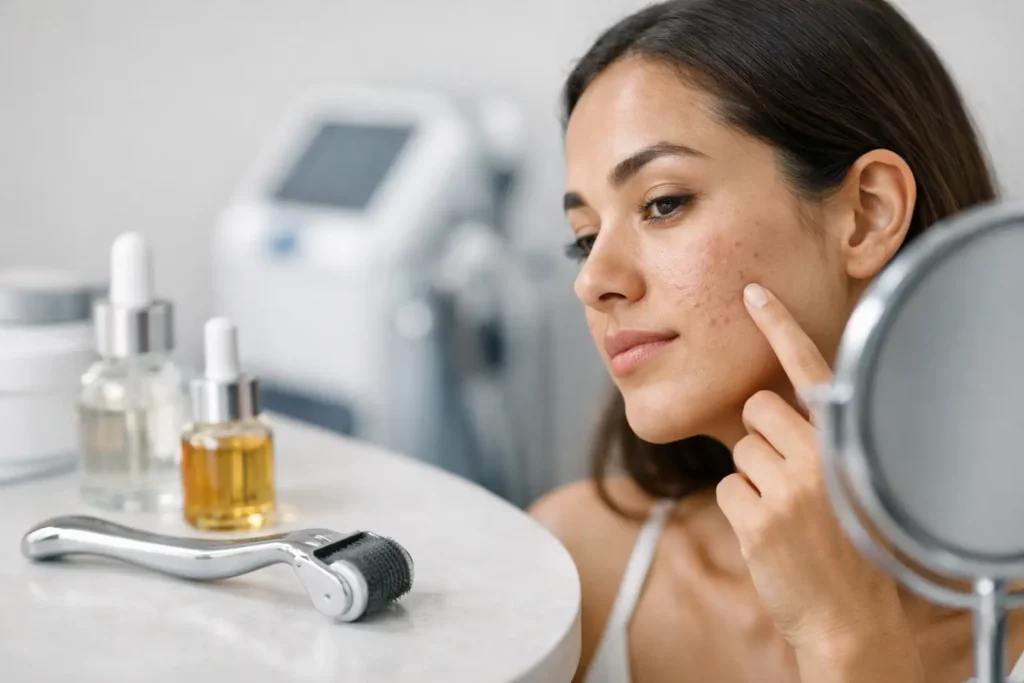
Acne may be temporary, but the texture changes it leaves behind can linger much longer than most people expect. When patients ask about the top treatments for acne scars, the real answer is rarely one-size-fits-all. The best plan depends on the type of scar, your skin tone, how much downtime you can manage, and how aggressively you want to treat the issue.
Table of Contents
ToggleThat is where medical guidance matters. Acne scarring is not a single condition. Ice pick scars, boxcar scars, rolling scars, and post-inflammatory discoloration all behave differently, which means they do not respond equally to the same treatment. A thoughtful approach starts with identifying what is actually present on the skin, then building a treatment plan that improves texture while protecting your skin barrier and supporting long-term results.
Why acne scars are harder to treat than active acne
Active acne is often about controlling oil, bacteria, inflammation, and clogged pores. Scars are different. Once collagen has been lost, tethered, or remodeled unevenly, topical products alone usually cannot fully correct the issue.
This is why many over-the-counter scar claims fall short. Good skincare can support healing, improve tone, and help prevent new breakouts, but deeper textural scars usually need procedures that stimulate collagen, release scar bands, or resurface the skin more directly. The goal is improvement, not overnight perfection.
Top treatments for acne scars by scar type
The most effective acne scar treatment is the one matched to the scar itself. In many cases, combining procedures gives the best cosmetic outcome because different scars often show up on the same face.
Microneedling for early and moderate textural scarring
Microneedling is one of the most versatile options for acne scars, especially when the concern is mild to moderate textural irregularity. The treatment creates controlled micro-injuries in the skin, which triggers a healing response and encourages new collagen production.
For rolling scars and superficial boxcar scars, microneedling can gradually smooth the skin and improve overall texture. It also tends to be a strong option for patients who want a series-based treatment with relatively manageable downtime. You should expect improvement over time rather than after a single appointment.
For some patients, pairing microneedling with PRP can enhance the healing environment and support recovery. This combination is often appealing to those who want a more regenerative approach without moving straight into more aggressive resurfacing.
RF microneedling for deeper remodeling
If standard microneedling is helpful, radiofrequency microneedling may take collagen stimulation further. This treatment combines tiny needles with heat energy delivered into the skin, which can improve both scar texture and skin tightening.
RF microneedling is often considered for patients with more established acne scarring or those who also want broader skin rejuvenation benefits. It can be especially useful when texture changes come with enlarged pores or mild laxity. The trade-off is that it may involve a higher price point and still requires multiple sessions for best results.
Chemical peels for discoloration and superficial marks
Not every mark left behind by acne is a true scar. Sometimes what patients call scarring is actually lingering pigment or redness. In these cases, chemical peels may play an important role.
Peels help exfoliate damaged surface cells, improve skin tone, and support a brighter, more even complexion. They are generally more effective for post-inflammatory hyperpigmentation and superficial irregularity than for deep depressed scars. That distinction matters because a peel can make the skin look fresher while doing little for sharply indented scars.
The right peel strength depends on your skin type, sensitivity, and history of pigmentation. Deeper is not always better, especially in patients who are prone to post-inflammatory darkening.
Subcision for tethered rolling scars
Some acne scars are pulled downward by fibrous bands beneath the surface of the skin. This is common with rolling scars, which create a wavy or uneven appearance. In these cases, collagen stimulation alone may not be enough because the scar is mechanically tethered.
Subcision is a treatment that releases those bands under the skin so the depressed area can lift more naturally. It is one of the most effective options for this scar type and is often underappreciated by patients who have already tried resurfacing treatments without seeing the improvement they hoped for.
This is also a good example of why diagnosis matters. If a scar is tethered, the skin may need release before resurfacing treatments can create a smoother final result.
Laser resurfacing for stronger correction
Laser treatments can be among the top treatments for acne scars when the goal is more noticeable resurfacing. Fractional laser technology can target areas of damaged skin while stimulating collagen and promoting a smoother surface.
For deeper boxcar scars, mixed scar patterns, and more advanced textural concerns, laser resurfacing may offer a stronger corrective effect than lighter treatments. It can also improve pigment irregularity and overall skin quality. The trade-off is usually more downtime, more aftercare, and a greater need for careful patient selection.
Laser is not ideal for everyone. Skin tone, tanning history, sensitivity, and the risk of pigment changes all need to be considered before moving forward. This is where an in-person consultation becomes especially valuable.
Dermal filler for selected depressed scars
Filler is not the first treatment most people think of for acne scarring, but in the right setting, it can be very effective. Certain depressed scars can be improved by restoring volume beneath the indentation, helping the skin surface look smoother.
This approach is often best for broader, atrophic scars rather than narrow ice pick scars. The result can be immediate, which appeals to patients preparing for an event or wanting quicker visible change. However, depending on the product used, maintenance may be needed over time.
TCA CROSS for ice pick scars
Ice pick scars are deep, narrow, and notoriously difficult to treat with general resurfacing alone. One focused option is TCA CROSS, which places a concentrated acid directly into the scar to stimulate controlled remodeling.
This is a very specialized technique and works best for the specific scar type it is designed to address. It is not the universal answer for all acne scars, but for true ice pick scars, it can be a valuable part of a broader treatment plan.
The best results usually come from combination treatment
One reason acne scar correction can feel frustrating is that many patients are treating several problems at once. You might have rolling scars on the cheeks, a few boxcar scars near the temples, enlarged pores, and leftover pigment from recent breakouts. No single treatment is likely to address all of that equally well.
A customized plan may include a series of microneedling sessions, targeted subcision for tethered areas, chemical peels for discoloration, and prescription skincare to maintain progress. In a medically guided setting, combination treatment is often what creates the most natural and meaningful improvement.
This is also why realistic expectations matter. The goal is smoother, healthier-looking skin with visible improvement in texture and tone. Complete scar erasure is rarely the right promise, and any provider who suggests otherwise is not giving you the full picture.
What to look for in a scar treatment plan
The best acne scar treatment plans are personalized, not packaged. A proper consultation should evaluate scar type, acne activity, skin tone, medical history, and lifestyle factors like downtime tolerance and budget.
If you are still breaking out regularly, active acne may need to be controlled before scar-focused procedures begin. If your skin is highly reactive or prone to pigment changes, your provider may recommend a slower approach with barrier support and careful pretreatment. These details affect both safety and results.
At DermAlign Medical Aesthetics, this type of one-on-one planning is central to achieving natural-looking outcomes. Scar revision should feel informed and collaborative, not rushed.
Supporting your results at home
Procedures do the heavy lifting for textured acne scars, but home care still matters. Daily sunscreen is essential because UV exposure can worsen discoloration and interfere with recovery. Medical-grade skincare may also help improve skin turnover, support collagen, and reduce the chance of future breakouts that can create new marks.
The key is using the right products at the right time. Aggressive exfoliation during recovery can backfire, and layering too many active ingredients may irritate the skin rather than improve it. A guided routine usually performs better than a trial-and-error shelf full of products.
If acne scars have made you feel like smooth skin is no longer realistic, that is often more about the wrong treatment than the wrong candidate. The right plan starts with a careful diagnosis, a clear understanding of what each procedure can and cannot do, and the patience to build results over time. Better skin is usually not about choosing the most aggressive option first. It is about choosing the most appropriate one for your skin.