Skip to content

One of the first questions patients ask in consultation is, how much filler will I need? It is a smart question, and the honest answer is that filler is never one-size-fits-all. The right amount depends on your anatomy, the area being treated, your starting volume loss, and how subtle or noticeable you want the result to be.
Table of Contents
ToggleSome people need a single syringe to soften a specific concern. Others need a more complete plan that treats multiple areas in stages for balance. A natural result is not about using the most filler. It is about using the right product, in the right place, in the right amount.
How much filler will I need for a natural look?
If your goal is to look refreshed, not overdone, less is not always better, but balance matters more than quantity. A tiny amount in the wrong area can do very little. Too much in one feature can make the face look heavy or unnatural. This is why an experienced injector looks at your face as a whole instead of treating one line or one fold in isolation.
For many patients, the best plan starts conservatively. You may begin with one to two syringes in a focused area, then build over time if needed. That approach allows for precision and gives you room to adjust based on how the filler settles and how you feel about the result.
Age also plays a role. Someone in their late 20s or 30s may want a small enhancement, such as subtle lip definition or early under-eye support. Someone in their 40s, 50s, or beyond may be addressing deeper volume loss in the cheeks, temples, jawline, or lower face. Both patients can look natural, but the amount required may be very different.
Typical filler amounts by treatment area
The number of syringes used depends heavily on where filler is placed. Lips usually require less product than cheeks or jawline contouring, while full-face rejuvenation may involve several syringes placed strategically across multiple areas.
Lips
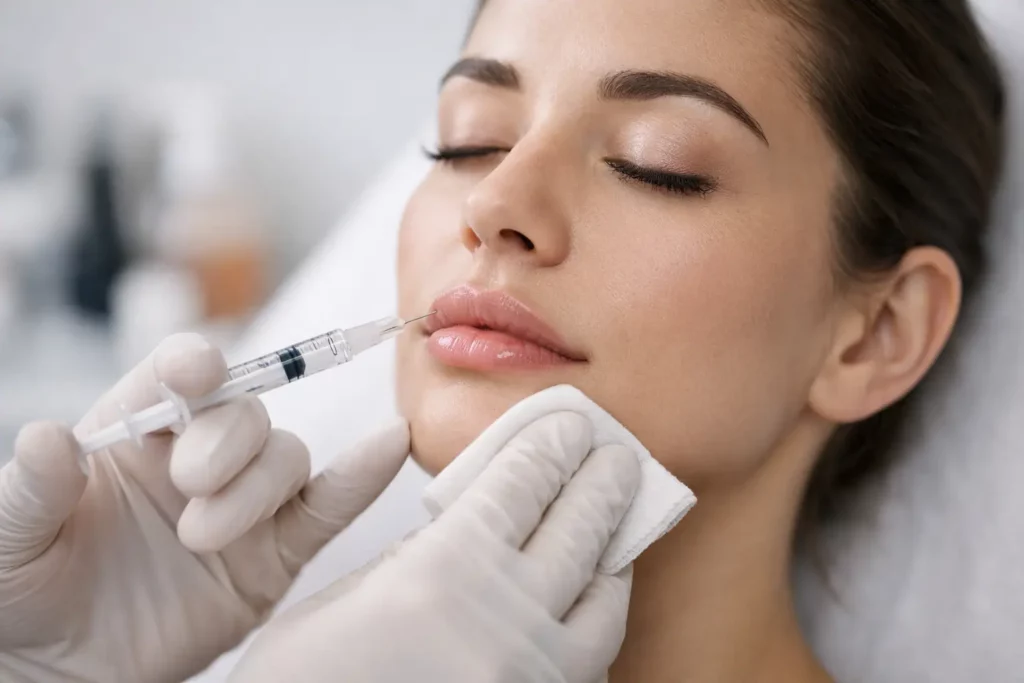
Lip filler is often the area where patients worry most about overfilling. In reality, a natural lip enhancement commonly starts with 0.5 to 1 syringe. If you want hydration, soft definition, or a subtle shape improvement, that may be enough. If you want a fuller result, especially if your lips naturally have very little volume, you may need more than one session.
A gradual approach tends to look more refined. It also helps protect the natural movement and proportions of the lips.
Cheeks
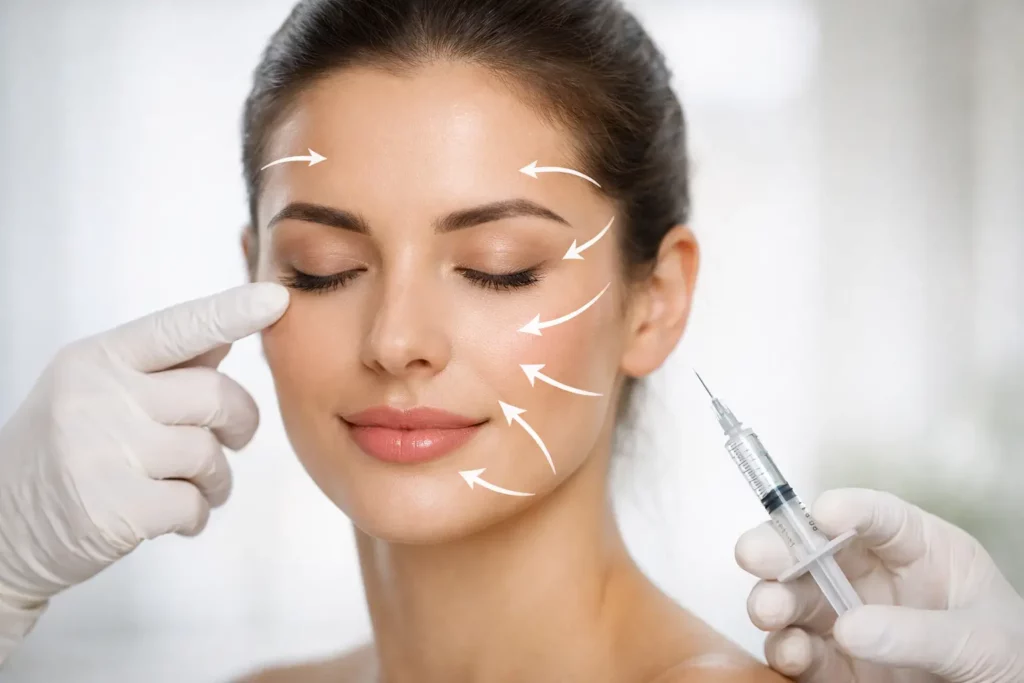
Cheek filler often requires more product because it is restoring structure, not just adding surface volume. One syringe total may create a mild improvement in a younger patient, but many patients need 2 syringes or more for noticeable support, especially when treating both sides.
When the cheeks are restored properly, the face can look lifted and less tired. It can also soften the appearance of nasolabial folds without placing too much filler directly into those folds.
Nasolabial folds and marionette lines
These lines are common concerns, but they are not always best treated directly. In some cases, one syringe may soften them. In others, supporting the cheeks first creates a better result with less product in the lower face.
This is where treatment planning matters. Filling every crease directly can lead to puffiness. Addressing the cause of volume loss often creates a cleaner, more elegant outcome.
Under-eyes
Under-eye filler usually requires a careful, conservative hand. Many patients need about 1 syringe total, sometimes less, depending on hollowing and skin quality. This area is delicate and not every patient is a good filler candidate. If puffiness, poor skin elasticity, or significant under-eye bags are present, another treatment may be more appropriate.
Jawline and chin
Lower face contouring often takes more filler than patients expect. Building definition in the jawline or projection in the chin usually requires multiple syringes, especially if the goal is visible sculpting or improved facial balance from profile view.
A chin may need 1 to 2 syringes, while the jawline often needs 2 to 4 or more depending on anatomy. Men and women both request this area, but the strategy differs based on bone structure, facial width, and the look you want.
Why two people can need very different amounts
The same treatment area does not mean the same syringe count. A patient with strong cheek structure who has only mild early volume loss may need a very small correction. Another with flatter midface support or more advanced aging may need a more comprehensive approach.
Metabolism, prior filler history, skin thickness, and facial asymmetry also affect planning. Some patients are maintaining previous filler and only need touch-ups. Others are starting fresh and need foundational support first. That is why online estimates can be helpful for context, but they are never a substitute for an in-person assessment.
Your aesthetic goals matter just as much as your anatomy. If you want the softest possible change, your treatment plan may be intentionally conservative. If you want more contour or more noticeable enhancement, you may need additional product or staged appointments.
How much filler will I need in one visit?
A lot of patients assume everything should be done in one appointment. Sometimes that makes sense, but not always. A single visit may be enough for a focused concern like subtle lips or a small chin enhancement. For more advanced facial balancing, a staged plan is often the safest and most polished route.
There are good reasons to spread treatment out. Swelling can temporarily exaggerate volume, especially in the lips. Some areas need time to settle before deciding whether more is truly necessary. And from a budget standpoint, many patients prefer to prioritize one or two key areas first, then return later.
Transparent treatment planning should include both what is ideal and what is realistic. You deserve to know what will create meaningful improvement now, and what can wait.
More filler is not always better
One of the biggest misconceptions in aesthetics is that more syringes automatically mean better results. In experienced hands, filler should support your features, not dominate them. The goal is harmony, not volume for the sake of volume.
This is especially true in areas like the lips, under-eyes, and around the mouth, where too much product can distort movement or attract attention for the wrong reason. In other areas, such as the cheeks or jawline, using too little may not create enough structure to make the treatment worthwhile. Both under-treating and over-treating can miss the mark.
That is why personalized consultation matters so much. At DermAlign Medical Aesthetics, treatment planning is centered on your facial anatomy, your comfort level, and results that look elevated yet believable.
What to ask during your filler consultation
If you are wondering how much filler will I need, the best consultation is one that goes beyond syringe numbers. Ask which areas are actually driving your concern. Ask whether your results would be better with filler alone or with a combination approach. In some cases, neurotoxin, skin rejuvenation, biostimulators, or collagen-supporting treatments may give a more complete result than adding more filler.
You should also ask whether your plan is meant to be a first step or a full correction. That distinction matters. One syringe may be enough for improvement, but not enough for your end goal. Knowing that ahead of time helps set clear expectations.
Pricing transparency matters too. A thoughtful provider will explain how many syringes are recommended, why they are recommending them, and what options exist if you want to phase treatment over time.
The best answer is personal
So, how much filler will I need? For some patients, the answer is half a syringe. For others, it is several syringes placed strategically across the face. The right number is the one that respects your anatomy, supports your goals, and keeps the result looking smooth, balanced, and like you on your best day.
If you are considering filler, focus less on chasing a certain syringe number and more on choosing a provider who knows when to add, when to hold back, and how to build a plan that fits your face. That is where beautiful results begin.