Skip to content
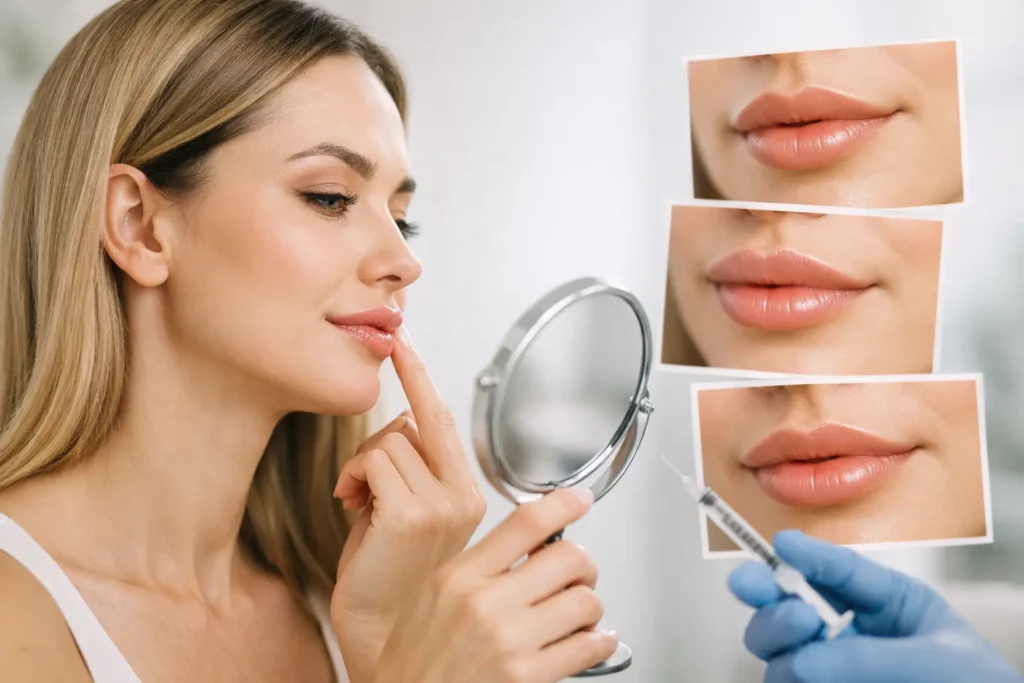
A lip filler result that no longer feels like you can be unsettling, whether your lips look overfilled, uneven, migrated, or simply different from the look you had hoped for. If you are wondering how to dissolve lip filler, the answer depends first on what was injected. Most modern lip fillers are made of hyaluronic acid and can often be reduced or reversed with a prescription enzyme called hyaluronidase. The treatment can be highly effective, but it should always begin with a careful, in-person medical assessment.
Table of Contents
ToggleHow to Dissolve Lip Filler With Hyaluronidase
Hyaluronic acid fillers, including many commonly used lip fillers, are designed to attract water and create soft volume. Hyaluronidase is an enzyme that breaks down hyaluronic acid. When injected strategically into the treatment area, it can dissolve unwanted filler and help restore a more natural lip shape.
At DermAlign Medical Aesthetics, lip filler dissolving using Hylenex is approached with the same precision and individualized planning as filler placement. This is not a one-size-fits-all correction. The goal may be to fully dissolve the filler, soften a heavy appearance, address a specific area of migration, improve asymmetry, or create a cleaner foundation before a future refill.
The injector will first review your filler history whenever possible. Knowing the product used, the date of treatment, the amount injected, and any prior dissolving treatments helps inform a safer, more accurate plan. Even when those details are unavailable, an experienced medical injector can assess the lips and surrounding tissue to determine whether dissolving is appropriate.
Not Every Lip Filler Can Be Dissolved
Hyaluronidase works on hyaluronic acid filler. It does not dissolve fillers made from other materials, including certain biostimulatory or permanent products. This distinction matters because attempting to treat an unknown filler without proper evaluation can lead to frustration and an unsuitable treatment plan.
If you received filler years ago and are uncertain about the product, be transparent during your consultation. Bring records, before-and-after photos, or the name of the practice that performed the treatment if you have them. These details can be useful, but they are not always required for a skilled provider to begin evaluating your options.
In some cases, what looks like retained filler may actually be swelling, natural lip anatomy, scar tissue, or changes in facial balance over time. A thoughtful assessment prevents unnecessary injections and ensures the treatment addresses the real concern rather than the assumption.
What Happens During a Lip Filler Dissolving Appointment?
A lip filler dissolving appointment starts with a focused conversation about what you see and what you would like to change. Some patients want to return completely to their natural lips. Others still enjoy subtle volume but want less projection, a smoother upper lip, or correction of filler that has migrated above the lip border.
Your provider examines the lips at rest and in motion, evaluating shape, symmetry, volume distribution, and the surrounding area. Medical history is also reviewed, including allergies, prior reactions, medications, autoimmune conditions, and recent dental procedures or illness.
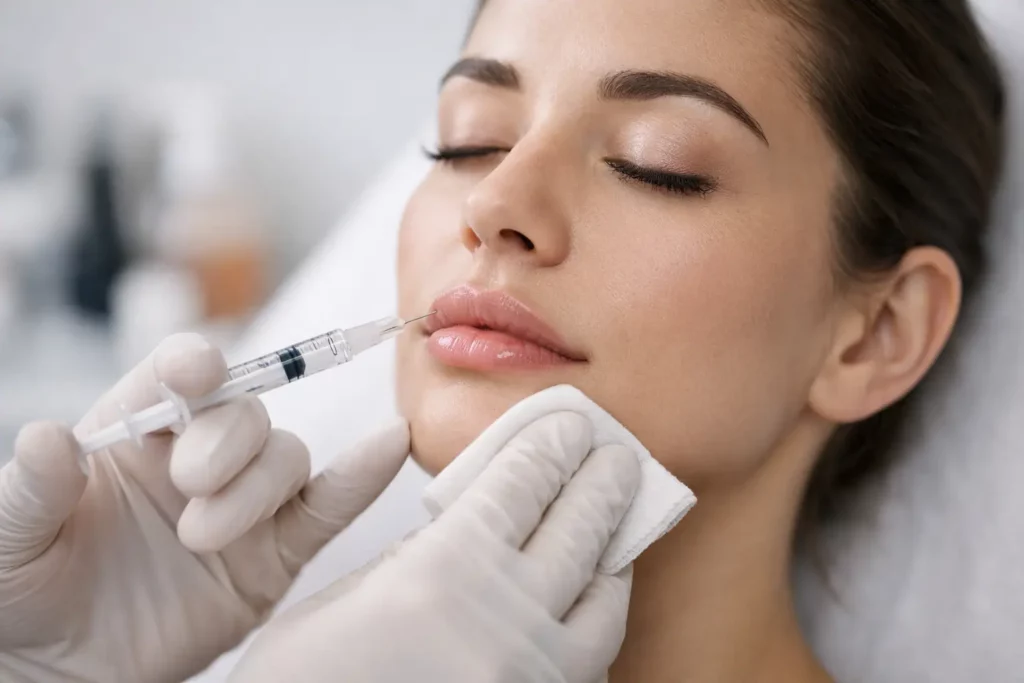
If hyaluronidase is the right choice, the area may be numbed before a series of precise injections is placed into the filler. The process is generally brief. You may feel pressure, a quick pinch, and temporary fullness from the injection itself. Because lips are vascular and sensitive, minor pinpoint bleeding, tenderness, bruising, and swelling are possible.
Some providers recommend an allergy assessment or test dose based on your health history and the specific product being used. Although allergic reactions are uncommon, hyaluronidase is a prescription medication and should be administered in a medical setting prepared to recognize and manage complications.
How Quickly Does Lip Filler Dissolve?
Hyaluronidase begins working quickly, and many patients notice a change within hours to a few days. That said, the final outcome is not always immediate. Swelling from the injection can temporarily make the lips appear fuller or uneven, while existing inflammation can obscure the true result.
Most patients are reassessed after the tissue has had time to settle. Depending on the amount of filler, its location, how long it has been present, and the desired degree of correction, one session may be enough. More established filler or significant migration can require additional treatment.
Patience is especially valuable when the goal is refinement rather than complete reversal. Dissolving too aggressively can leave the lips looking temporarily deflated or create a result that is more difficult to fine-tune. A conservative approach with a planned follow-up often provides greater control.
Will Dissolving Filler Remove Your Natural Lip Volume?
This is one of the most common concerns, and the honest answer is that it can happen to a degree. Hyaluronidase is intended to target injected hyaluronic acid, but it may also affect some naturally occurring hyaluronic acid in the area. For this reason, overly broad or unnecessary dissolving is not ideal.
The effect on natural tissue is generally temporary because your body continues to produce hyaluronic acid. Still, lips that have been filled repeatedly can look less voluminous once filler is removed. That does not necessarily mean the dissolver damaged your lips. It may simply reveal your baseline anatomy after you have become accustomed to added volume.
A medically trained injector can discuss whether partial dissolving, staged treatment, or waiting before refilling better supports your aesthetic goals. Natural-looking results are not about making lips smaller or larger by default. They are about restoring balance, softness, and proportions that feel right for your face.
When Should You Seek Urgent Care?
Most requests to dissolve lip filler are elective, such as correcting migration, asymmetry, or an overfilled look. However, severe or worsening pain, blanching or whitening of the skin, a dusky or mottled color change, cold skin, blistering, or changes in vision after filler are medical warning signs.
These symptoms can indicate a vascular complication and require immediate assessment by a qualified injector or emergency medical care. Do not wait to see whether the issue improves overnight, and do not attempt to massage, puncture, or treat the area yourself. Timely intervention is critical.
If your concern is cosmetic rather than urgent, you should still avoid at-home remedies. Massage tools, heat, supplements, facial exercises, and online “filler dissolving” hacks do not reliably remove hyaluronic acid filler. They can irritate already sensitive tissue and delay appropriate care.
Preparing for Treatment and Recovery
Your provider will give you guidance tailored to your medical history, but practical preparation often includes avoiding unnecessary blood-thinning supplements or medications only when medically appropriate and approved by your prescribing clinician. Arriving with clean lips and avoiding scheduling immediately before an important event can also make recovery more comfortable.
After treatment, you may be asked to avoid excessive heat, strenuous exercise, alcohol, or pressure on the lips for a short period. Cold compresses can help with swelling when used gently. Do not aggressively massage the area unless your injector specifically instructs you to do so.
Bruising may last several days, and tenderness can persist briefly. Contact your provider promptly if you experience escalating pain, significant swelling, hives, difficulty breathing, or any symptom that feels unusual or concerning. Clear aftercare instructions and access to clinical support should be part of your treatment experience, not an afterthought.
Can You Get Lip Filler Again After Dissolving?
Yes, many patients choose to receive lip filler again after dissolving. The timing depends on why the filler was dissolved, how much was treated, and how the lips heal. In many cases, waiting at least two weeks allows swelling to resolve and gives the tissue time to stabilize. Some patients benefit from a longer waiting period, particularly after extensive correction or multiple dissolving sessions.
A refill should not be automatic. It is an opportunity to reset the plan. Consider what you liked about your previous result, what felt out of proportion, and whether a smaller amount, different placement technique, or slower build-up would better match your goals. Beautiful lip filler should look intentional, feel comfortable, and complement your features rather than compete with them.
Choosing to dissolve lip filler is not a failure or a reason to feel embarrassed. It is a valid part of informed aesthetic care. When you work with a qualified medical professional who listens closely and treats with restraint, you can make a confident decision about what comes next for your lips.