If you have ever stood in the sunscreen aisle comparing SPF 30, 50, and 100 while wondering what actually matters, you are not alone. Patients ask us all the time, what is the best SPF? The honest answer is not a single number or brand. It is the sunscreen you will apply correctly, reapply consistently, and feel comfortable wearing every day.
That may sound simple, but there is real science behind it. The best SPF depends on your skin type, your history of sun exposure, whether you are treating pigmentation or aging concerns, and how much time you spend outdoors. A product that works beautifully for a runner in July may not be the best fit for someone with rosacea, acne-prone skin, or a post-procedure recovery plan.
What is the best SPF, really?
SPF stands for sun protection factor, and it measures how well a sunscreen protects against UVB rays, which are the rays most associated with sunburn. But the best sunscreen choice is not just about UVB. You also need broad-spectrum protection, which means the formula helps shield your skin from UVA rays too. UVA exposure contributes heavily to premature aging, dark spots, and collagen breakdown.
Here is where many people get tripped up. Higher SPF does offer more protection, but not in the dramatic way most assume. SPF 30 blocks about 97 percent of UVB rays. SPF 50 blocks about 98 percent. SPF 100 blocks about 99 percent. That does not mean SPF 100 gives you double the protection of SPF 50. It gives you a smaller increase, and for many people, that difference is less important than proper application and reapplication.
So when patients ask what is the best SPF, our clinical answer is usually this: for everyday use, most adults should wear at least SPF 30 broad-spectrum sunscreen. If you have melasma, hyperpigmentation, fair skin, a history of skin cancer, or significant sun exposure, SPF 50 is often the better choice.
Why SPF alone is not enough
A sunscreen label can look impressive, but the number on the bottle is only one part of the conversation. Texture, ingredients, finish, and wearability matter more than people realize. If a sunscreen leaves a heavy white cast, pills under makeup, stings your eyes, or causes breakouts, you are less likely to use enough of it.
And that is where protection breaks down. Most people under-apply sunscreen by a wide margin. In testing, SPF values are measured when sunscreen is applied generously. In real life, many people apply half the amount they need, which means they are getting much less protection than the label suggests.
That is why the best SPF is the one that fits your real routine. Luxury skincare and aesthetic treatments can absolutely elevate your results, but daily sunscreen is what helps protect that investment. If you are using advanced skincare, receiving microneedling, treating pigment, or simply trying to maintain healthy, even-toned skin, SPF is not optional.
What is the best SPF for different skin types?
Not every sunscreen suits every complexion or concern. A tailored recommendation almost always leads to better compliance.
For oily or acne-prone skin
Look for lightweight, non-comedogenic formulas that feel breathable and dry down well. Gel, fluid, or oil-free mineral-chemical hybrid formulas are often more comfortable than rich creams. If a sunscreen feels greasy by 10 a.m., it is probably not your best match.
For dry or mature skin
Cream-based sunscreens with hydrating ingredients can work beautifully. Hyaluronic acid, glycerin, and ceramides can help support the skin barrier while protecting against UV damage. Mature skin often benefits from formulas that feel nourishing rather than tight or chalky.
For sensitive skin or post-procedure skin
Mineral sunscreens with zinc oxide and titanium dioxide are often preferred because they tend to be gentler. This can be especially important after treatments that temporarily increase sensitivity. If your skin is reactive, ingredient simplicity matters.
For deeper skin tones
The right sunscreen should protect your skin without leaving an ashy finish. Many newer mineral formulas are tinted or more elegantly blended, and some chemical sunscreens offer invisible wear. Cosmetic elegance matters because it increases the odds that you will wear it every single day.
SPF 30 vs SPF 50: which should you choose?
This is one of the most common sunscreen questions, and the answer depends on how much margin for error you want. In a controlled setting, SPF 30 is effective. In everyday life, people sweat, rub their face, miss spots, and forget to reapply. That is why many providers recommend SPF 50 for daily facial use, especially if you are serious about prevention.
If you are inside most of the day and only getting incidental exposure while driving or running errands, SPF 30 may be reasonable if you apply enough. If you spend more time outside, live an active lifestyle, are managing pigmentation, or want stronger daily coverage, SPF 50 is often the smarter option.
The trade-off is texture. Some higher-SPF products feel thicker, and if that makes you avoid them, a well-formulated SPF 30 you love may outperform an SPF 50 you rarely use.
Mineral vs chemical sunscreen
There is no universal winner here either. Both can be effective, and both have pros and cons.
Mineral sunscreens use ingredients like zinc oxide and titanium dioxide to protect the skin. They are often favored for sensitive skin and after certain aesthetic treatments. Their downside can be texture or white cast, although newer formulations have improved significantly.
Chemical sunscreens use active ingredients that absorb UV radiation before it damages the skin. They often feel lighter, blend more easily, and work well under makeup. For some people, they are simply more wearable, which makes them a better practical choice.
The best SPF is not the one with the most online hype. It is the one that suits your skin, your goals, and your willingness to use it properly.
How much sunscreen should you actually use?
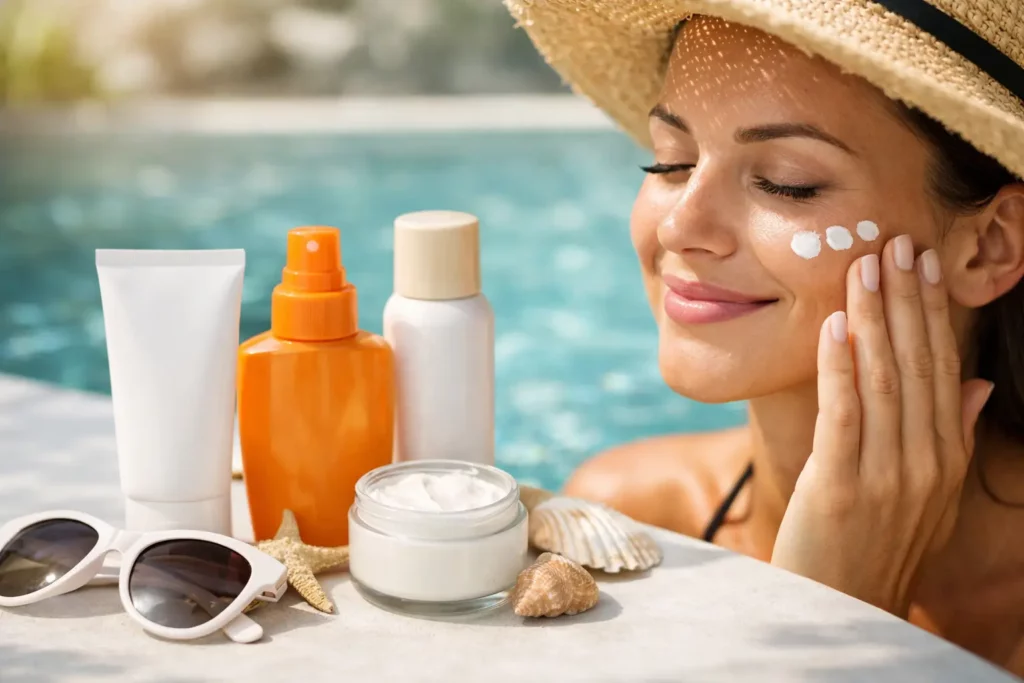
This is where even good skincare habits often fall short. For the face and neck, most adults need about two finger lengths of sunscreen, depending on the formula. If you are only dabbing on a small amount, you are likely not getting the labeled SPF.
Reapplication matters too. If you are outdoors, sweating, swimming, or sitting in direct sun, sunscreen should be reapplied every two hours. For makeup wearers, that can feel inconvenient, but powders, sticks, and carefully layered reapplication methods can help.
Daily consistency matters more than perfection. If you are applying sunscreen every morning, covering your face, neck, chest, and ears, and remembering to reapply during prolonged exposure, you are doing far more for your skin than someone chasing the highest SPF number without a routine.
Sunscreen and aging: the connection patients underestimate
Many people think of sunscreen as beach protection. In aesthetic medicine, we see it differently. UV exposure is one of the most significant external drivers of premature aging. Fine lines, uneven pigment, loss of elasticity, rough texture, and worsened redness can all become more noticeable with repeated sun exposure over time.
If you invest in skincare, injectables, collagen-stimulating treatments, or corrective procedures, sunscreen helps preserve those results. It supports healthy skin at every age, whether your goal is prevention in your 20s and 30s or maintenance and correction later on.
At DermAlign Medical Aesthetics, sunscreen is often part of the broader conversation because it supports almost every skin goal patients bring to us. Not because it is trendy, but because it works.
So, what is the best SPF to buy?
A smart starting point is broad-spectrum SPF 30 or 50 from a reputable medical-grade or dermatologist-recommended line, chosen based on your skin type. If your skin is sensitive, lean mineral. If you struggle with wearability, a cosmetically elegant chemical or hybrid formula may be the better fit. If you have pigmentation concerns or extensive outdoor exposure, err toward SPF 50.
Just as important, choose a sunscreen you do not mind using on ordinary days. The best SPF is not reserved for vacations, pool days, or summer weekends. It belongs next to your moisturizer as part of your morning routine, all year long.
Your skin does not need a perfect sunscreen. It needs a reliable one that you will actually wear, generously and consistently, because the smartest sun protection plan is always the one you can keep.